Buying Genuine Car Parts Below Dealer Price: How Trade-Surplus Stock Works
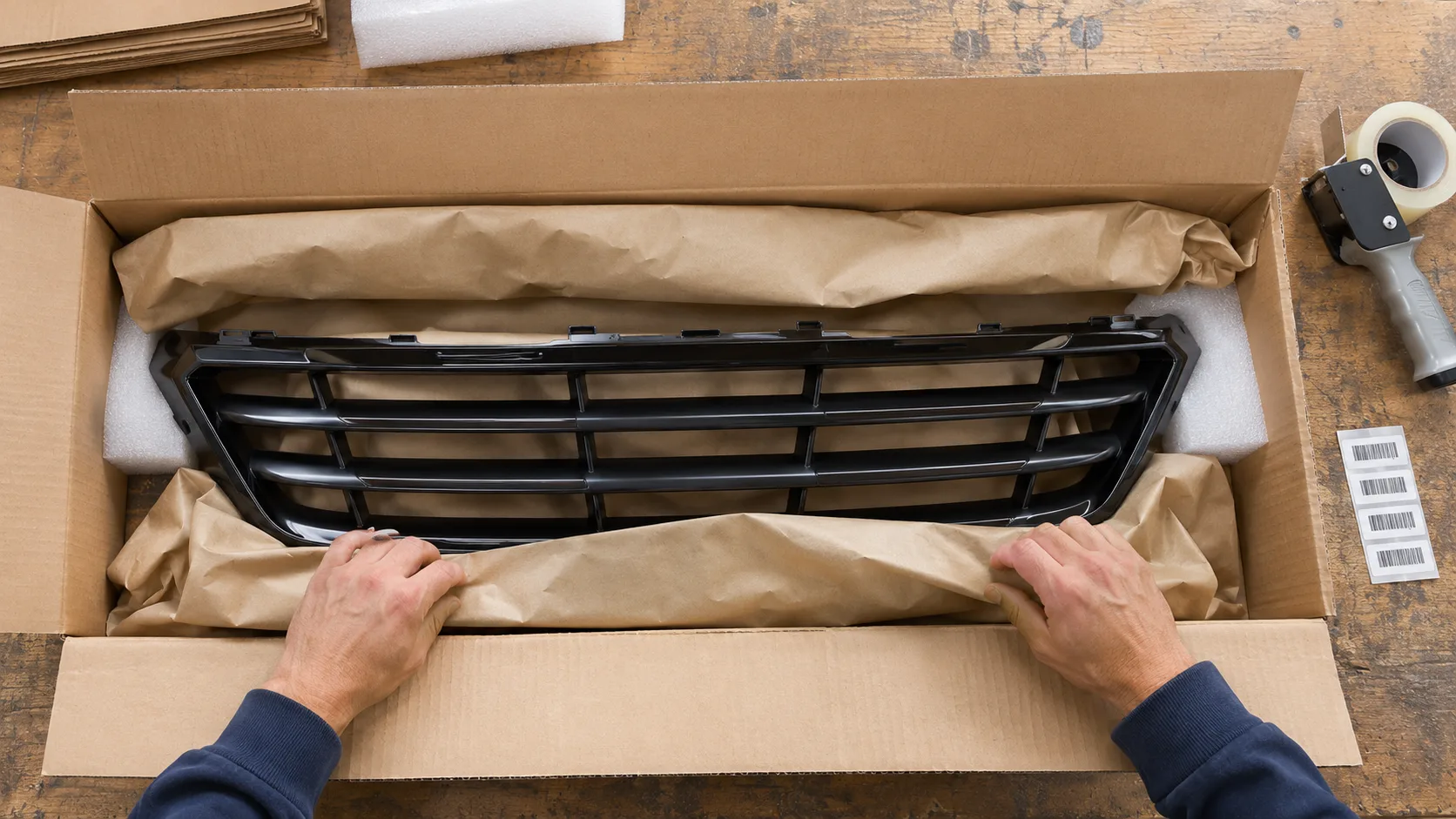
Two boxes, the same part number, the same manufacturer's label — and a noticeable gap between the prices. Nothing shady explains it. One box is travelling the standard route from maker to dealer counter; the other is trade surplus: a genuine part that was bought into the repair trade, never fitted, and sold on rather than left to gather dust. Here is the whole journey, step by step, from the shelf it got stuck on to the buyer who finally fits it.
Step 1: A genuine part is ordered — and never used
Surplus is born in ordinary workshop life. A customer books a repair and doesn't come back. An insurance job changes scope after the parts arrive. A part number is superseded mid-order, or a batch is bought generously to be safe. The result sits in every parts department and bodyshop store in the country: brand-new, unused, genuine OEM components, still in their original boxes, belonging to no live job.
Step 2: The shelf quietly charges rent
An unused part is not a neutral object. It is paid-for capital doing nothing, occupying racking a busy workshop needs, drifting out of any return window its supplier offered, and depreciating in relevance as the car parc moves on. Most garages know the pile exists; few put a number on what it is costing them to keep it.
Step 3: The garage sells the stock on instead of writing it off
This is where the trade-surplus market starts. Eco Auto Solutions buys unused genuine OEM parts from garages as a standing redundant stock service: the garage sends photos of what's on the shelf, gets an offer within 24 hours, and the stock is collected with the next scheduled pickup — no separate logistics to arrange. For the seller, dead stock becomes cash and clear racking in a single step.
Step 4: The stock is checked and listed
Bought stock is verified as what it claims to be — genuine OEM, unused, correctly identified by part number — and then listed for resale through EAS Parts, which deals in genuine OEM parts only and ships UK-wide. The verification step is the quiet backbone of the model: a surplus marketplace only works if "genuine and unused" is checked rather than assumed.
Step 5: The buyer pays less for the identical item
Now the price gap makes sense. The part didn't become cheaper by being copied, recovered from a scrapped car, or refurbished — it became cheaper because its first buyer's margin and holding cost have already been absorbed, and the seller's alternative was a write-off. The buyer gets the same component, same box, same fit, at a trade-surplus price. A related but separate stream runs alongside it: good-condition bumpers from bumper collection rounds are refurbished and resold — honestly described as refurbished, never passed off as new stock.
Step 6: Everyone's incentives line up
The garage recovers money and space. The buyer gets genuine quality below dealer price. And a manufactured component gets used for the purpose it was built for instead of being skipped — which, for a business whose motto is Recycling, Reusing, Reinventing Value, is the point of the exercise.
Got shelves that look like Step 1? Send us photos of your unused genuine stock and you'll have an offer inside a day — 0141 260 6602, or start with our contact page. Buying rather than selling? EAS Parts ships genuine OEM across the UK.
FAQ
Are trade-surplus parts new or used?
New. Trade surplus means unused, genuine OEM stock in original packaging that was simply never fitted. It should not be confused with salvage parts recovered from vehicles, or with refurbished items — reputable sellers label those categories separately and clearly.
How can I confirm a surplus part is actually genuine?
By the part number. Genuine OEM components carry the manufacturer's part number on the item and packaging, which can be checked against the vehicle maker's catalogue or your dealer's parts desk. A seller who deals in genuine OEM only, and states the part number up front, is giving you everything needed to verify before buying.
Will a surplus part definitely fit my car?
Only if the part number matches — fit is determined by part number, not by model name, because one model can span several variants and running changes. Check the number against your VIN-specific listing before ordering, exactly as you would at a dealer counter.
What sort of stock can a garage actually sell this way?
Unused genuine OEM parts — the still-boxed stock from cancelled jobs, supersessions and over-ordering. Condition and provenance matter more than category: if it's genuine, unfitted and identifiable by part number, it's worth photographing and sending in for an offer.