Dealer Parts Departments: Turning Excess Stock into Cash Instead of Write-Offs
Twice a year, most parts departments meet their shelves properly. Stocktake is when the comfortable fiction — that everything in the racking is an asset — gets tested against reality, and the gap between the two usually has a name: lines that haven't moved in a year, orders for jobs that never happened, boxes bought in threes when one was needed. The reflex response is a write-off, which turns the problem into a tidy accounting entry and the parts into a skip run. There is a better sequence. Here it is, step by step.
Step 1: Draw the line between slow and stopped
Not everything gathering dust is surplus. A slow line that still sells a few times a year may earn its shelf space; a line with no movement since the last stocktake almost certainly doesn't. Run the sales history and be unsentimental about the cut-off — the aim of this step is a definitive list of stock that your own counter is never going to shift, because every later step works from that list. Parts managers who skip this step end up selling stock they'd have sold anyway, and keeping stock they never will.
Step 2: Exhaust the official routes first
Some of the list will still have a road home: supplier return schemes, buy-back allowances, transfers to a sister site that actually sells that franchise's slower lines. Use whatever is still open to you — though for most aged stock, those windows closed long ago, and a part number that has since been superseded rarely travels back up the chain at all. What survives this step is the true residue: genuine parts, new and boxed, that the official system has no further use for. That residue is what the write-off pile is made of — and it's exactly what the trade-surplus market buys.
Step 3: Photograph it and send it out
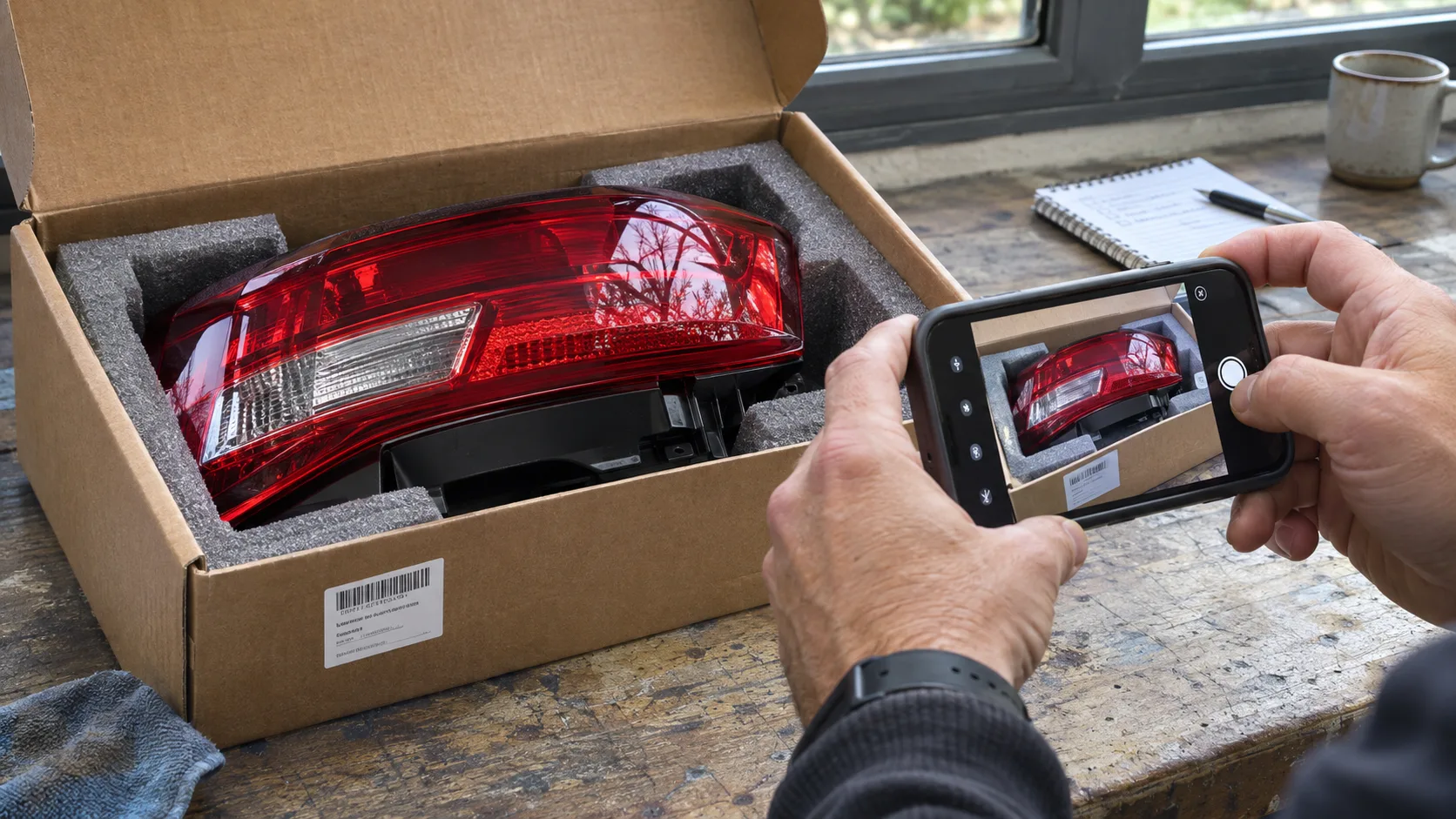
The surplus trade works on sight. Clear photos of the shelves or the boxed stock — labels and part numbers visible — are enough for a buyer to assess what you're holding; nobody needs you to build a spreadsheet first. We buy unused genuine OEM parts in precisely this way as redundant stock: photos in, an offer back within 24 hours. The stock is then resold through EAS Parts — genuine OEM only, shipped UK-wide — which is worth knowing when you wonder where the boxes go: back into repairs, as the parts they were made to be.
Step 4: Weigh the offer against the honest alternative
An offer on dead stock can look modest next to the number on the original invoice — but the invoice price isn't the alternative on the table. The alternative is a write-off: the full cost absorbed, the racking still occupied until someone pays to clear it, and the parts themselves scrapped. Judge the offer against that, and against the quieter costs that vanish with the stock: the insurance and audit burden of holding it, the stocktake hours spent counting it, and the picking errors caused by live lines buried behind dead ones. Cash in, space back, counting done — that's the real comparison.
Step 5: Clear it, and keep it clear
The final step is making this a routine rather than a rescue. A department that reviews surplus every quarter sells it young — current numbers, strong demand, better offers — instead of letting it age into obscurity. Collection shouldn't interrupt the workshop either: where a site already has pickups running, surplus stock simply travels with the next one, the way our parts purchases ride along with a scheduled bumper collection from accident repair sites. Little and often beats a five-year purge.
Put a number on one shelf
Pick the worst bay in the stockroom, photograph it, and find out what it's actually worth within 24 hours — start with that one shelf, or ring 0141 260 6602.
FAQ
Does selling surplus stock to the trade undercut our own parts counter?
No — the point of step one is that this stock has already demonstrated your counter can't sell it. Surplus sold on serves repairers and buyers your franchise territory was never going to reach, while your shelf space goes back to lines that do move locally.
What condition does surplus stock need to be in to sell?
Unused and genuine is the core requirement: parts that have never been fitted, in their original packaging where possible, with labels and part numbers identifiable. Shelf-worn boxes are normal for aged stock and don't rule a part out the way a fitted or damaged one would.
Why do surplus buyers deal only in genuine OEM parts?
Because provenance is the product. A buyer reselling into repairs has to stand behind every box being exactly what its label says, and that assurance only holds when the stock is the manufacturer's own, bought unused from the trade. Pattern parts have their own market through other channels.
How is surplus stock different from parts stripped off used vehicles?
Entirely different trades. Dismantlers recover used parts from end-of-life vehicles; the surplus market deals in new, never-fitted stock that simply sat on the wrong shelf. A surplus part is the same article the dealer counter would have sold — only its journey, not its condition, distinguishes it.