We buy the parts you never fitted: how redundant stock buy-back works
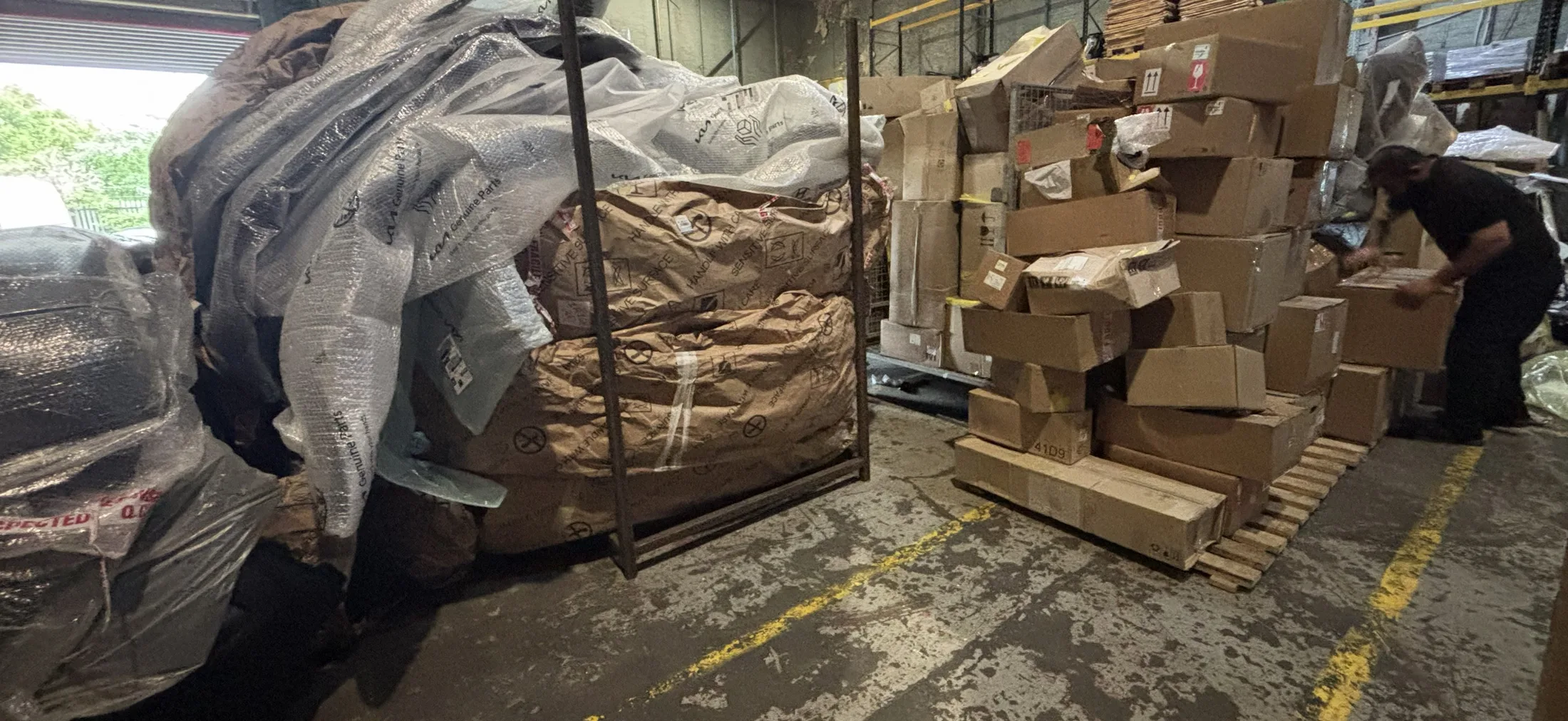
Walk into the storage area of almost any busy bodyshop and you'll find it: the shelf — sometimes the whole room — of brand-new parts that never made it onto a car. Genuine OEM bumpers ordered for a job that changed. Headlights for a vehicle written off mid-repair. Special orders that couldn't go back once the return window closed. New parts, still in the manufacturer's box, quietly eating floor space year after year.
Most waste collectors would tell you to throw them in with the recycling. We'd rather pay you for them — and put them back to work.
Why new parts pile up
Nobody plans to accumulate dead stock — it's a by-product of how repair work actually runs:
- The job changes. An insurer re-scopes mid-repair, or the vehicle is declared a total loss after the parts were already ordered.
- The return window closes. Many genuine parts can only go back to the supplier within a set period — and bodyshop jobs have a way of outlasting it.
- Non-returnable orders. Special-order and painted items often can't be returned at all.
- Wrong part, right box. Ordering errors that were never worth the hassle of chasing.
Individually, each part is a small loss already written off. Across a few years, it's a warehouse problem — and real money sitting idle on shelves.
Reinventing value — the third part of our motto
Our motto is Recycling, Reusing, Reinventing Value, and each word is a different route a part can take through our operation:
- Recycling — workshop plastic waste we collect is granulated into polypropylene regrind and supplied back to manufacturing.
- Reusing — collected bumpers in good enough condition are refurbished and resold as used parts rather than shredded.
- Reinventing Value — and this is where your shelf comes in: unused genuine OEM stock we purchase from garages is reintroduced to the industry at sensible prices, so a brand-new part gets to do the job it was made for instead of gathering dust.
Shredding a perfectly good new part is the worst outcome for everyone — the garage that paid for it, the repairer who could have used it, and the environment that paid for its manufacture. Buy-back fixes all three at once.
You can see where those parts end up — browse the rescued stock at EAS Parts, our online store where garages and the public buy genuine parts at a fraction of their original price.
How it works
We've made the process deliberately effortless, because dead stock sits at the bottom of every bodyshop's priority list:
- Send us photos. Snap what you've got — shelves, pallets, boxes — and send it through our enquiry form, with a parts list if you have one.
- Offer within 24 hours. We review and come back with an offer inside a day.
- Collected with your next pickup. If you're on one of our collection schedules, the stock leaves with the same van that takes your bumpers and plastics. One-off clearances work too — including full rooms and warehouses.
What we're looking for: unused genuine OEM parts — bumpers, panels, headlights and other components, ideally in original packaging, in any volume from one shelf to a complete clear-out.
Stock clearance and waste collection, one visit
For most customers, buy-back runs alongside the regular service: the van arrives on schedule, the waste plastics go in the bins, cages and bumper racking, the redundant stock is collected against the agreed offer, and an electronic waste transfer note covers the waste side of the visit. Your storage gets emptier in both directions.
Got a shelf — or a room — you've been meaning to deal with? Send us a photo today or call 0141 260 6602. The offer costs nothing to hear.
FAQ
What kinds of parts do you buy? Unused genuine OEM parts that were never fitted — bumpers, panels, headlights and other components. Original packaging helps but isn't essential. If you're unsure, send the photo anyway.
How fast will I get an offer? Within 24 hours of receiving your photos or parts list.
Do I have to be an existing collection customer? No — though if you are, collection is even simpler, as the stock travels with your scheduled pickup.
What happens to the parts you buy? They're reintroduced to the industry — listed at accessible prices so garages and repairers can put brand-new genuine parts to use at a fraction of their original cost.