Superseded Part Numbers and Missed Return Windows: How Good Stock Gets Stranded
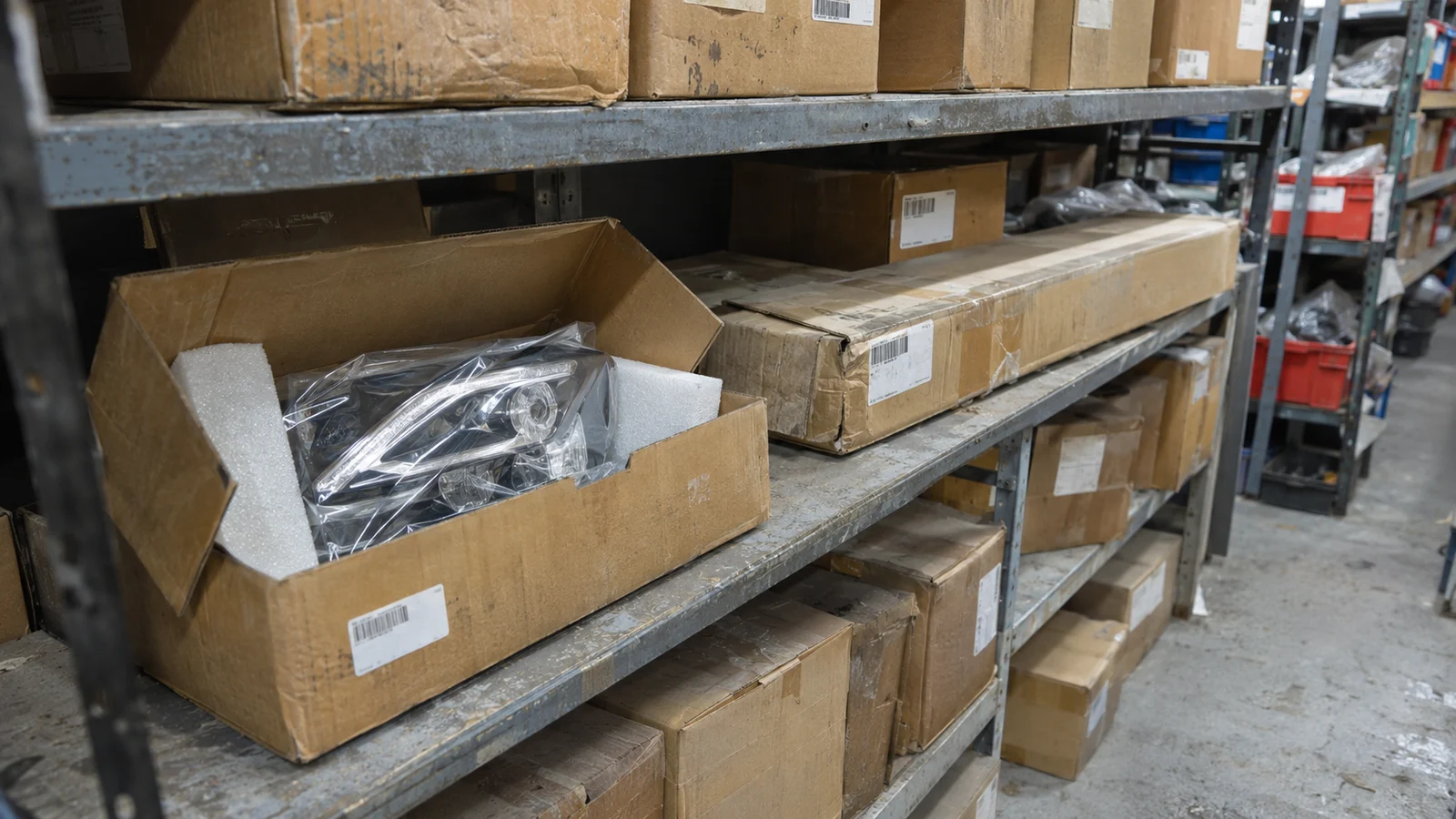
The part did nothing wrong. It arrived genuine, boxed and correct to the order — and two years later it is still on the shelf, worth less every month and dealt with by nobody. Stranded stock is rarely the result of one bad decision. It is the result of five small, ordinary ones, each of which has a fix.
Mistake 1: ordering ahead of certainty
A bumper and a lamp get ordered the day the estimate goes in, because the lead time is long and the ramp is booked. Then the authorisation comes back amended, the customer withdraws the claim, or the car is written off at strip-down — and the parts arrive for a job that no longer exists.
The fix is not to stop ordering early — sometimes the job needs it — but to treat every cancelled-job part as a live problem the week it becomes one. A part dealt with inside a month has options. A part discovered during a stocktake has a story.
Mistake 2: letting the return window close
Most suppliers will take an unused part back — within a window, in original packaging, sometimes minus a handling charge. The window passes quietly while the box sits in "returns corner" waiting for a slow afternoon — and once it has closed, the easiest route back to cash is gone for good.
The fix is a standing weekly habit: one person, one list, every part bought for a job that didn't consume it, with the return deadline written next to each line. Ten minutes a week keeps the corner empty.
Mistake 3: ignoring supersession
Part numbers are not permanent. Manufacturers revise components and retire the old number, superseding it with a new one. The physical part on your shelf may still fit a huge population of cars — but the moment its number is superseded, dealer systems stop quoting it, return routes get harder, and buyers searching by the current number will never find it.
The fix is to understand that a part's commercial value peaks while its number is current and decays from the day it is superseded. "It'll keep" is true of the plastic and false of the price. Stock you are not going to fit soon is worth most if you move it now.
Mistake 4: separating the part from its story
A part with its original box, label and a note of the job it was bought for is a verifiable genuine OEM part. The same part loose on a rack, box binned to save space, is just a shape — and nobody pays genuine-part money for a shape. Provenance is most of the price.
The fix costs nothing but discipline: the box stays with the part, the label stays on the box, and the reason it exists gets written somewhere findable.
Mistake 5: waiting for the pile to justify the effort
The most common reason good stock strands is the belief that it is not yet worth dealing with — that two bumpers and a headlamp don't justify anyone's time, so the pile should grow first. The pile obliges. Meanwhile supersession, dust and damaged packaging eat the value of everything already in it.
The fix is a route where small quantities are no harder than large ones. Eco Auto Solutions buys unused genuine OEM parts as redundant stock: photograph what's on the shelf, send it in, and you get an offer within 24 hours. Agreed parts are simply collected with your next scheduled pickup — the same visit that takes your bumper collection — and resold through EAS Parts, which deals in genuine OEM parts only and supplies them UK-wide. The parts get fitted to cars instead of fossilising, and the shelf goes back to work.
Collections run across all of Scotland and the North of England. Send photos of what's stranded through our contact page or ring 0141 260 6602 — the offer lands within 24 hours.
FAQ
Is a part with a superseded number worthless?
No — it still fits every vehicle it always fitted, and owners of those cars still need it. What supersession kills is convenience: dealer systems point at the replacement number, so the old-number part needs a seller who can match it to the vehicles it serves. Specialist resale routes exist for exactly this reason.
Does an opened box ruin the resale value?
An opened box is survivable; a missing one is the problem. Buyers of genuine OEM stock want to see the original packaging, the manufacturer label and an undamaged part. A box that has been opened for inspection and resealed tells that story fine.
Can I sell parts that were bought for a customer who never returned?
Usually, once a reasonable period has passed and any deposit position is settled — but check how the part was invoiced. A part bought and paid for by the customer is theirs; a part your business bought speculatively against a booking is stock, and stock can be sold.
How is a redundant-stock offer actually worked out?
From the photographs: part identity, whether the number is current or superseded, condition of part and packaging, and the realistic resale demand for the vehicles it fits. That's why clear photos of the label and the part itself get faster, firmer offers than a verbal list of part numbers.