Alloy Wheel Collection Alongside Plastics: One Visit, Every Stream
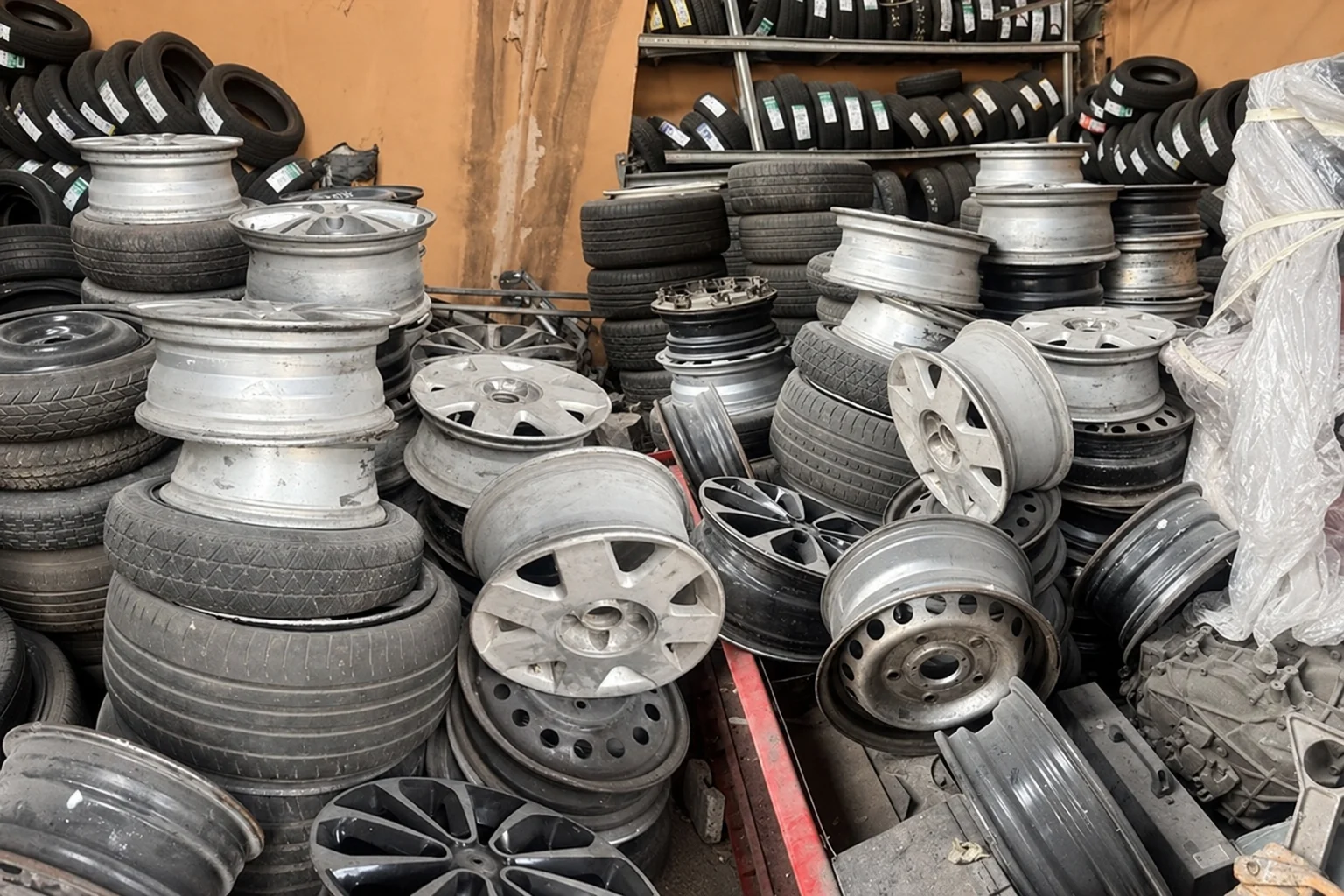
Walk around the back of most bodyshops and you'll find the same picture: a stack of scrap alloy wheels growing in one corner, bumpers leaning against a wall in another, and a mixed pile of trims, liners and grilles somewhere in between. Each of those is a separate waste stream, and too often each one has its own arrangement — a scrap metal merchant who turns up when called for the wheels, and something less certain for the plastics.
There is a simpler way to run it. Alloy wheels can be collected on the same scheduled visit as your bumpers and plastics, by the same registered carrier, with the same paperwork issued before the driver leaves. One visit covers every stream.
Why alloy wheels deserve a proper route
Scrap alloys come off vehicles constantly: kerbed wheels replaced under insurance work, corroded wheels swapped at service, damaged wheels from write-offs. Aluminium alloy is a genuinely valuable, endlessly recyclable material — which is exactly why it shouldn't sit in a corner waiting for an ad-hoc call to whoever will take it.
Scrap wheels are still controlled waste, and your duty of care under section 34 of the Environmental Protection Act 1990 applies to them just as it does to bumpers. That duty — which holds across England, Scotland and Wales — means handing them only to a registered waste carrier and keeping a record of every transfer. An informal cash arrangement with no paperwork leaves you with nothing to show if a regulator asks where your wheels went.
A structured alloy wheel collection closes that gap: wheels are picked up on schedule, documented, and sent into aluminium recycling rather than drifting off the books.
One visit instead of three contractors
The practical case for combining streams is just as strong as the compliance one.
A bodyshop that uses one carrier for wheels, another for plastics and perhaps a general skip for the rest is managing three relationships, three sets of paperwork and three sets of arrival times. Every extra contractor is another van in the yard, another invoice to reconcile and another record to keep for two years.
When alloy wheels ride on the same visit as your bumper collection, all of that collapses into one arrangement. The driver arrives on the agreed day — weekly, fortnightly, monthly or as a one-off, with no minimum volume — loads bumpers, headlights, hard and soft plastics and wheels together, and issues an electronic waste transfer note (eWTN) before leaving. Your records for the whole visit are digital, dated and filed without anyone standing over a carbon-copy pad.
Keeping the streams tidy between visits
Combined collection works best when streams stay separate on site. Wheels mixed into a bumper pile slow loading and risk scuffing bumpers that could otherwise be refurbished; plastics scattered across the floor eat workshop space.
Collection clients are supplied with bins, cages and bumper racking so each stream has a home off the floor: wheels stacked or caged in one spot, bumpers racked, loose trims and liners binned. The storage equipment is provided as part of the service, sized to your output, so the yard stays workable between pickups and the driver can load quickly on the day.
What happens to the material
Nothing collected goes to landfill. Plastics are stripped of unwanted components by hand and granulated into polypropylene regrind for plastics manufacturing; good-condition bumpers are refurbished and resold as used parts; alloy wheels go into aluminium recycling. The materials follow different routes after collection, but they leave your site on one van, under one transfer note, with one carrier accountable for all of it.
Ready to consolidate your collections?
Eco Auto Solutions is a SEPA-registered waste carrier (WCR/R/3021810, valid across Scotland, England and Wales) collecting alloy wheels, bumpers, headlights and plastics from garages across all of Scotland and the North of England. Contact us or call 0141 260 6602 to set up a schedule that covers every stream in one visit.
FAQ
Do scrap alloy wheels count as controlled waste?
Yes. Scrap wheels from repair and servicing work are controlled waste, so the duty of care under section 34 of the Environmental Protection Act 1990 applies: they must go to a registered waste carrier, with a transfer note recording the handover.
Can wheels with tyres still fitted be collected?
Speak to us about the mix you produce before your first collection. The simplest arrangement for most workshops is to collect bare wheels, with tyres handled as their own stream — we'll confirm what works for your site when we set up the schedule.
Is there a minimum number of wheels per collection?
No. There is no minimum volume on any stream. Wheels are collected alongside whatever bumpers and plastics you have on the scheduled day, whether that's a handful or a full cage.
Do I get separate paperwork for wheels and plastics?
Everything collected on a visit is documented before the driver leaves, via an electronic waste transfer note issued at every collection. You keep a clean digital record for each pickup rather than juggling paperwork from several contractors.