Common Waste Compliance Mistakes Bodyshops Make — and How to Fix Them
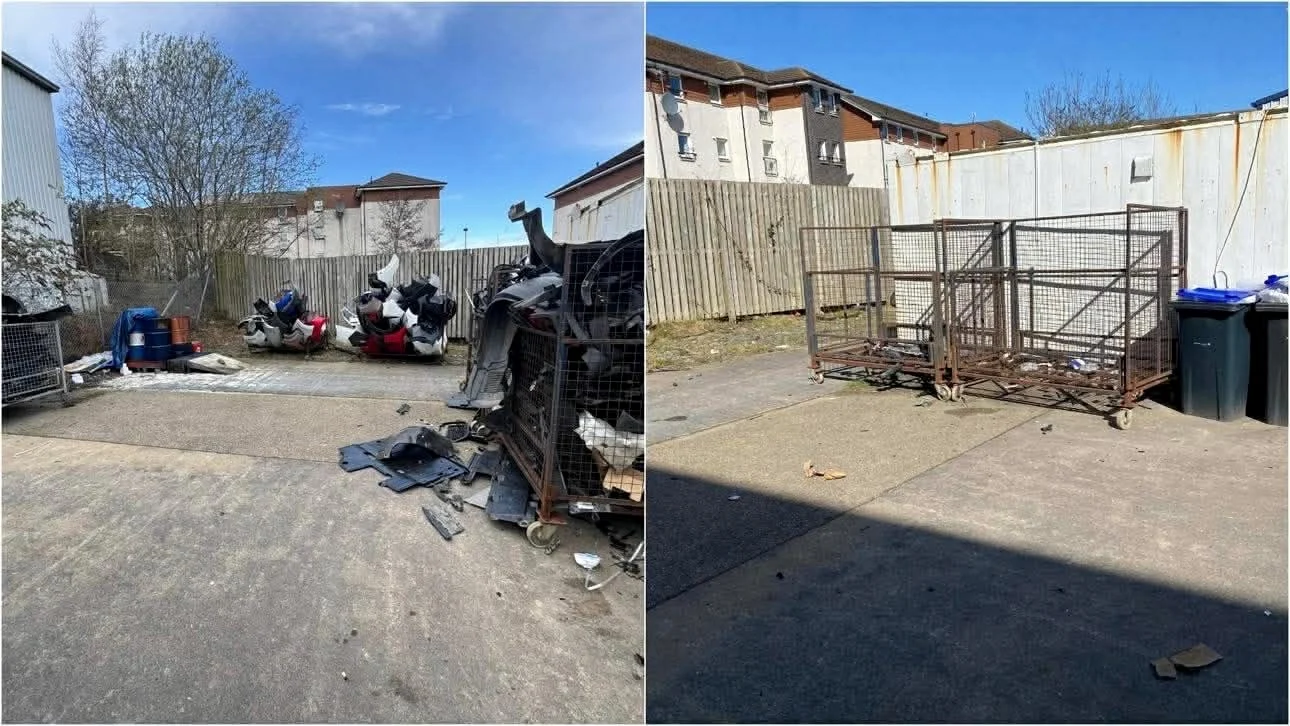
Almost no bodyshop sets out to break waste rules. The failures that regulators actually find are mundane: a habit nobody questioned, a form filled in the same lazy way for years, a pile that grew because moving it was never urgent. Mundane problems have mundane fixes. Here are six mistakes that recur in workshops across the UK, and the fix for each.
Mistake 1: describing everything as "general waste"
A transfer note that says "general waste" or "scrap" for a load of bumpers, trims and headlights is a description in name only. Waste documentation is supposed to say what the waste actually is, because everyone downstream relies on that description to handle it lawfully.
The fix: describe loads properly — bumpers as bumpers, plastics as plastics — and work with contractors whose paperwork does the same. A carrier that collects a defined stream, such as a dedicated plastic waste collection, produces accurate descriptions as a matter of course, because the load genuinely is what it says.
Mistake 2: one skip for everything
Paint tins on top of bumpers, oily rags among the trims, sealant cartridges in with the headlights. Mixing streams doesn't just destroy recyclability — it can drag a whole load towards a stricter classification, since waste contaminated by hazardous material may need treating as hazardous itself.
The fix: segregate at source, and make the right bin the nearest bin. Give each stream a labelled home — plastics in one, metals in another, contaminated materials strictly apart — so doing it correctly takes no extra steps. Collection clients get bins, cages and bumper racking supplied as part of the service, which is exactly the kind of storage equipment that makes segregation the path of least resistance.
Mistake 3: records that live in a glovebox
Plenty of shops receive paperwork for every collection — then lose it. A carbon copy in the van, a crumpled sheet behind the parts counter, a folder someone took home. When SEPA or the Environment Agency asks where last spring's waste went, "we definitely had it somewhere" is not an answer.
The fix: one place, every note, no exceptions. A simple digital folder beats a thorough paper one, which is where electronic waste transfer notes help: each of our collections is documented with an eWTN before the driver leaves, so the record arrives already filed rather than already fading.
Mistake 4: waste stored like it's already gone
A bumper pile against the back fence, open to the weather, slowly migrating across the yard. Uncontained storage isn't just untidy — waste blowing off site or leaching into drains is a pollution problem you own, and it tells any inspector the rest of the system is probably no better.
The fix: store waste as carefully as stock — contained, off the ground, in quantities your collection schedule actually clears. If the pile outgrows the containers before every pickup, the answer is a more frequent schedule, not a bigger corner of the yard.
Mistake 5: assuming the contractor carries all the risk
Handing waste to someone else does not hand them your responsibility. The duty of care under section 34 of the Environmental Protection Act 1990 stays with the producer across England, Scotland and Wales — so an unregistered operator's shortcuts become your problem too. "The waste guy deals with all that" is not a compliance position.
The fix: know who takes your waste, confirm they're registered, and keep evidence of each handover. Two minutes of diligence per contractor, once.
Mistake 6: compliance that belongs to nobody
In many shops, waste is everyone's job and therefore no one's. The paperwork mistake, the mixed skip and the fence-line pile all grow in that gap.
The fix: name an owner — one person responsible for records, bins and the collection schedule, with a quick walk-round once a month. Most of the mistakes above die within weeks of someone actually looking for them.
Fix the system, not just the symptom
Every fix above gets easier with a collection arrangement built for bodyshop waste. Eco Auto Solutions collects bumpers, headlights, plastics and alloy wheels on weekly, fortnightly, monthly or one-off schedules across all of Scotland and the North of England — with equipment supplied and every visit documented. Call 0141 260 6602 or tell us what your yard looks like and we'll help you put the system right.
FAQ
Which of these mistakes do bodyshops make most often?
Mixing streams is the most common by far, because it's the default when bins aren't provided for each stream. It's also the most damaging, since one contaminated skip undoes the value and recyclability of everything in it.
Can mixed waste really become hazardous waste?
Contamination can change how a load must be classified — plastics soaked in solvent or mixed with paint waste are no longer simple non-hazardous plastics. Keeping hazardous materials physically separate from recyclable streams avoids the question ever arising.
Who should own waste compliance in a small bodyshop?
Whoever is most often on site and willing to do a monthly walk-round. The role is about consistency, not seniority: checking the bins are being used correctly, the records are in one place, and the collection schedule still matches the volume the shop produces.
How do I know if our collection schedule is wrong?
Look at the yard the day before a pickup. If containers are overflowing or waste has started living outside them, the schedule is too sparse for your throughput. Frequency can be adjusted — weekly, fortnightly or monthly — until storage comfortably bridges the gap between visits.