Can Cracked, Painted or Damaged Bumpers Still Be Recycled?
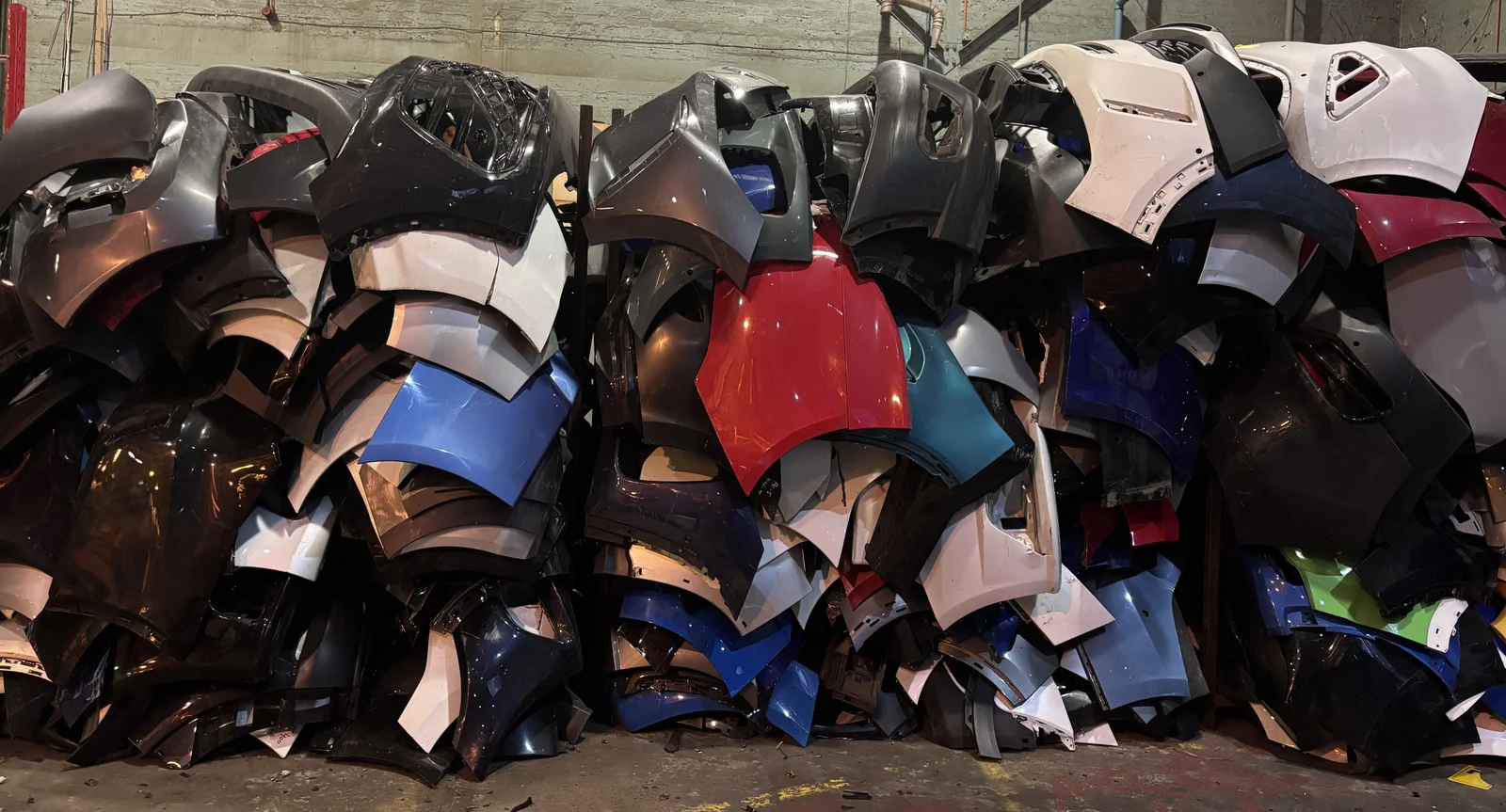
Short answer: yes. A bumper that is split in half, resprayed three times or scuffed beyond saving is still valuable recycling feedstock. This surprises a lot of bodyshop owners, because in most recycling streams condition is everything — a damaged item is a rejected item. Automotive plastic works differently, and understanding why can change how your workshop thinks about the pile of write-off bumpers in the corner of the yard.
Why damage doesn't matter to a granulator
The destination for most end-of-life bumpers is not another car — it is granulation. The bumper is reduced to small, consistent flakes of polypropylene known as PP regrind, which plastics manufacturers use as raw material for new products. A machine that is about to shred a bumper into flakes does not care whether that bumper arrived in one piece or six. Cracks, splits, snapped tabs and impact damage make no difference to the material itself: the polypropylene underneath is the same polymer whether the bumper looks showroom-fresh or came off a motorway write-off.
What the process does care about is what is attached to the plastic. That is why collected bumpers are stripped of unwanted components by hand before granulation — brackets, fixings, trims and anything else that is not the target polymer comes off first. The result is clean material ready to become PP regrind and go back into plastics manufacturing, with nothing sent to landfill.
What about paint?
Painted bumpers are accepted for recycling, so a full respray history is no reason to skip the recycling route. Nearly every bumper that leaves a bodyshop has been painted at least once — if paint were a barrier, there would be almost nothing to recycle. The hand-stripping stage exists precisely because real-world bumpers arrive with coatings, fixings and attachments rather than as pristine polymer, and the process is built around that reality.
The practical message for a workshop is simple: do not pre-sort your bumpers into "good enough to recycle" and "too far gone". If it is an automotive plastic bumper, it belongs in the recycling stream, whatever it looks like.
The exception that works in your favour
There is one condition check worth knowing about, and it runs in the opposite direction to what you might expect. Bumpers that come off vehicles in genuinely good condition can skip granulation altogether: we refurbish good-condition collected bumpers and resell them as used parts. So a lightly damaged vehicle that is being broken might yield a bumper with a second life ahead of it, while everything else heads to regrind. Either way, every bumper collected has a destination other than landfill — recycling and reusing are two halves of the same service.
Making damaged bumpers easy to handle on site
The awkward thing about damaged bumpers is not recycling them — it is living with them between collections. They are bulky, they do not stack neatly once cracked, and a loose pile eats floor space fast. That is why we supply bins, cages and bumper racking to collection clients, so bumpers and plastics are stored off the floor and the yard stays workable however rough the stock is. Have a look at our bins, cages and bumper racking if storage is the bottleneck in your workshop.
Clear the pile, whatever state it's in
Eco Auto Solutions runs bumper collection across all of Scotland and England down to Carlisle, Penrith and Newcastle, with capacity for 3,000+ bumpers a day. Schedules are weekly, fortnightly, monthly or one-off, there is no minimum volume, and an electronic waste transfer note is issued at every collection before the driver leaves. Cracked, painted, smashed or scuffed — send them all. Contact us or call 0141 260 6602 to arrange your first collection.
FAQ
Can a bumper that has been resprayed several times still be recycled? Yes. Painted bumpers are accepted, and collected bumpers are hand-stripped of unwanted components before being granulated into polypropylene regrind for plastics manufacturing.
Should I throw away bumpers that are snapped in half? No — put them in the recycling stream with everything else. Granulation reduces every bumper to flakes regardless of condition, so cracks and breaks make no difference to the material's value.
What happens to bumpers that are still in good condition? Good-condition collected bumpers are refurbished and resold as used parts, giving them a second life on another vehicle instead of going straight to regrind.
How should we store damaged bumpers before collection? Off the floor, ideally in dedicated racking. Eco Auto Solutions supplies bins, cages and bumper racking to collection clients so plastics and bumpers stay tidy and accessible between visits.