PP Regrind
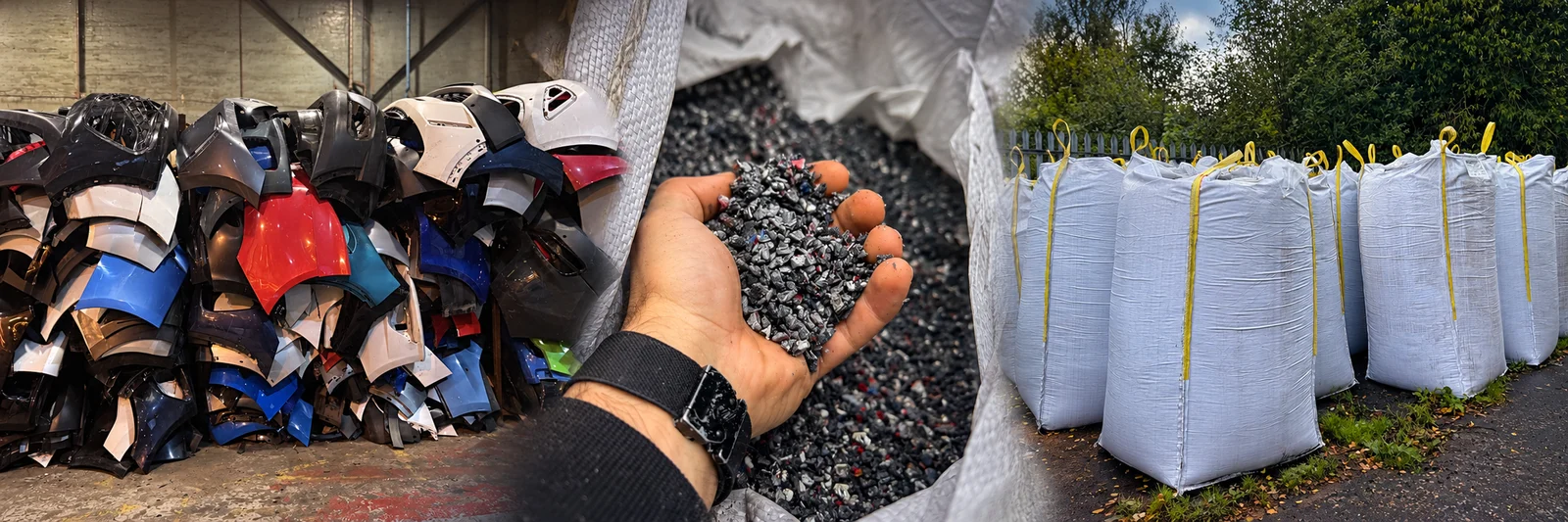
Single-stream polypropylene regrind, recovered from automotive bumpers and plastics and processed at our Hamilton facility — consistent material from a consistent source.
This page is for the other side of our loop: the compounders, injection moulders and manufacturers who buy what our collection service recovers. If you're a garage looking to get rid of plastics, you want our plastic waste collection — this is where those plastics end up.
Why bumper-derived regrind
Most modern bumpers are polypropylene — which makes them one of the most consistent single-polymer feedstocks in the waste stream. Our regrind comes exclusively from automotive plastics collected from garages, bodyshops and repair centres across Scotland and the North of England, which gives it two advantages over mixed-source material:
- A known input. Bumpers, wheel arch liners, trims — automotive PP, not a blend of unknowable packaging and consumer plastics.
- Hand preparation before granulation. Our operatives strip out brackets, sensors, wiring, lamps and foams before anything reaches the granulator, so contamination is dealt with at the source rather than discovered in your process.
Supply you can plan around
With collection capacity of over 3,000 bumpers a day feeding the operation, we produce regrind at a volume and regularity that supports ongoing supply arrangements, not just spot loads. We're a SEPA-registered operation (WCR/R/3021810) with full traceability from collection to granulate — every input bumper arrives with an electronic waste transfer note behind it.
The loop, closed
Our motto is Recycling, Reusing, Reinventing Value — and regrind is the "recycling" made literal: yesterday's bumper returning to manufacturing as tomorrow's raw material, with recycled-content credentials your own customers increasingly ask for.
Buying PP regrind — or want a sample conversation? Get in touch or call 0141 260 6602 and tell us the volumes and spec you work to.
FAQ
What is PP regrind? Polypropylene plastic that has been recovered, cleaned of contaminants and granulated into flake ready for reprocessing — in our case, recovered from automotive bumpers and plastics.
What makes regrind quality good or bad? Polymer purity and contamination control. Single-stream automotive input and hand preparation before granulation are what separate consistent regrind from mixed scrap.
Can you supply regularly rather than one-off? Yes — ongoing supply is exactly what our collection volume supports. Tell us your requirements through the contact page.
Where does the material come from? Automotive plastics collected by our own vans from garages and bodyshops across Scotland and the North of England — a traceable, documented input stream.