Obsolete Stock in Parts Departments: The Quiet Cost on the Shelf
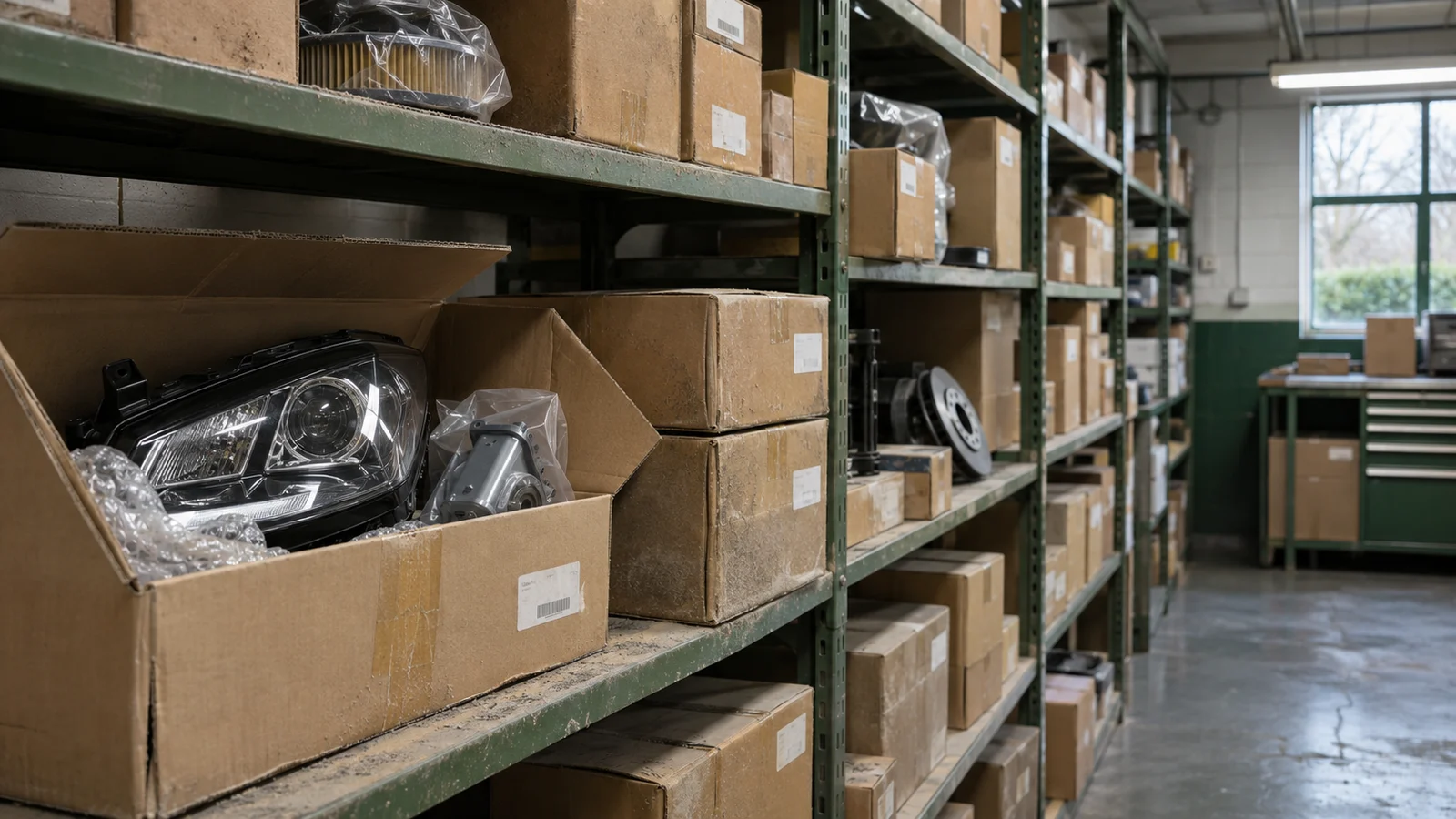
No invoice ever arrives for obsolete stock. That's what makes it dangerous. A parts department feels the cost of a late delivery the same afternoon; the cost of a shelf of ageing stock arrives silently, spread across tied-up cash, rented floor space, hours spent counting parts nobody will order, and a year-end write-down that lands as one unwelcome number. The stock didn't become worthless overnight — it got there through a series of small, fixable habits. Here are the five most common, and what to do about each.
Mistake 1: treating stock as an asset that holds its value
On the system, a part bought three years ago still shows at the price you paid. In reality its value has been quietly eroding the whole time: the model it fits gets facelifted, the part number gets superseded, the cars it serves age out of franchise workshops and into the independent sector. A boxed part is only worth what someone will pay for it, and that figure almost never goes up.
The fix: report stock by age band, not just by value. Once every month-end shows how much is sat at twelve, twenty-four and thirty-six months, the erosion stops being invisible — and decisions start happening while the stock still has a market.
Mistake 2: waiting for the "right" customer
Every parts manager has a shelf of items kept because "someone will need that eventually." Occasionally someone does — and that one sale is remembered far better than the fifty parts still waiting. Meanwhile the eventual customer is getting rarer, because the surplus market and online sourcing mean buyers are no longer limited to whoever happens to walk in.
The fix: set a trigger age — a point at which a part stops waiting and starts exiting, whether that's a return, a promotion to local trade, or sale into the surplus market. The discipline matters more than the exact number of months.
Mistake 3: letting supersessions and return windows drift
Manufacturers' supersession notices and stock-return programmes are the cheapest exits a part will ever have — and they expire. A notice filed "to deal with later" quietly converts returnable stock into stranded stock. (How good parts get stranded this way is a subject in its own right; the short version is that the calendar, not the part, does the damage.)
The fix: process supersession and returns paperwork on arrival, as a standing weekly job with an owner, not a rainy-day task. Ten minutes a week protects exits that can never be reopened.
Mistake 4: writing stock off and binning it
The grimmest outcome is also common: stock written down to nothing, then skipped to clear the racking. Yet an unused genuine part in its box has real resale value even years after purchase, because somewhere in the UK a repairer wants exactly that part at less than today's dealer price. Binning it pays for the skip; selling it pays you.
The fix: sell it as surplus. Through our redundant stock purchase service the process is deliberately light: photograph the shelf, send the pictures in, and get an offer within 24 hours — no stocktake, no listing each item yourself. The stock is collected and resold through EAS Parts as genuine OEM, UK-wide. Parts genuinely too far gone to sell — damaged bumpers, cracked trims — don't need the skip either; they go for granulation through a plastic waste collection instead of landfill.
Mistake 5: ignoring what the shelf space itself costs
Racking full of dead stock isn't neutral — it's space that can't hold fast-moving lines, forces overflow storage, and slows every pick. In a department paying commercial rent, the worst-performing square metres in the building are usually the ones holding parts that last sold under a previous DP.
The fix: put the space in the business case. When clearing a bay of obsolete stock is valued as cash recovered plus a bay regained, marginal decisions stop being marginal.
The shelf is a decision, not a fate
Obsolescence can't be eliminated — ordering parts means occasionally ordering the wrong ones. What separates well-run departments is how long a mistake is allowed to sit. Eco Auto Solutions buys unused genuine OEM stock from garages and dealer parts departments, with collections across all of Scotland and the North of England and parts resold UK-wide. One photo of the shelf is enough to start: send it via our contact page or call 0141 260 6602 for an offer within 24 hours.
FAQ
What's the difference between slow-moving and obsolete stock?
Slow-moving stock still sells, just rarely — it may earn its shelf space if margins are good. Obsolete stock has effectively stopped selling: the demand that justified buying it has gone. The useful test is forward-looking: not "when did this last sell?" but "what realistic event makes it sell again?"
Do opened or shelf-worn boxes still have surplus value?
Often, yes — what matters most is that the part itself is unused and undamaged. Tatty packaging reduces value rather than eliminating it. Parts that have been fitted, or that are missing components, are a different conversation and usually belong in a recycling stream rather than resale.
Is it better to discount obsolete stock locally or sell it as surplus in bulk?
Local discounting can get strong prices on individual fast-recognisable items, but it's slow and consumes counter time part by part. A bulk surplus sale trades a little margin per item for clearing the whole problem at once — cash in, space back, counting burden gone. Many departments sensibly do both: cherry-pick a few, bulk-sell the rest.
How do we stop the obsolete pile rebuilding after a clear-out?
Treat the clear-out as the start of a cycle, not a one-off. Keep the age-band report running, keep the weekly supersessions-and-returns slot, and put a recurring date in the diary — twice a year works for most — to sweep whatever has crossed the trigger age into the surplus route before it decays further.