Winter-Proofing Your Bodyshop: A Pre-Season Checklist
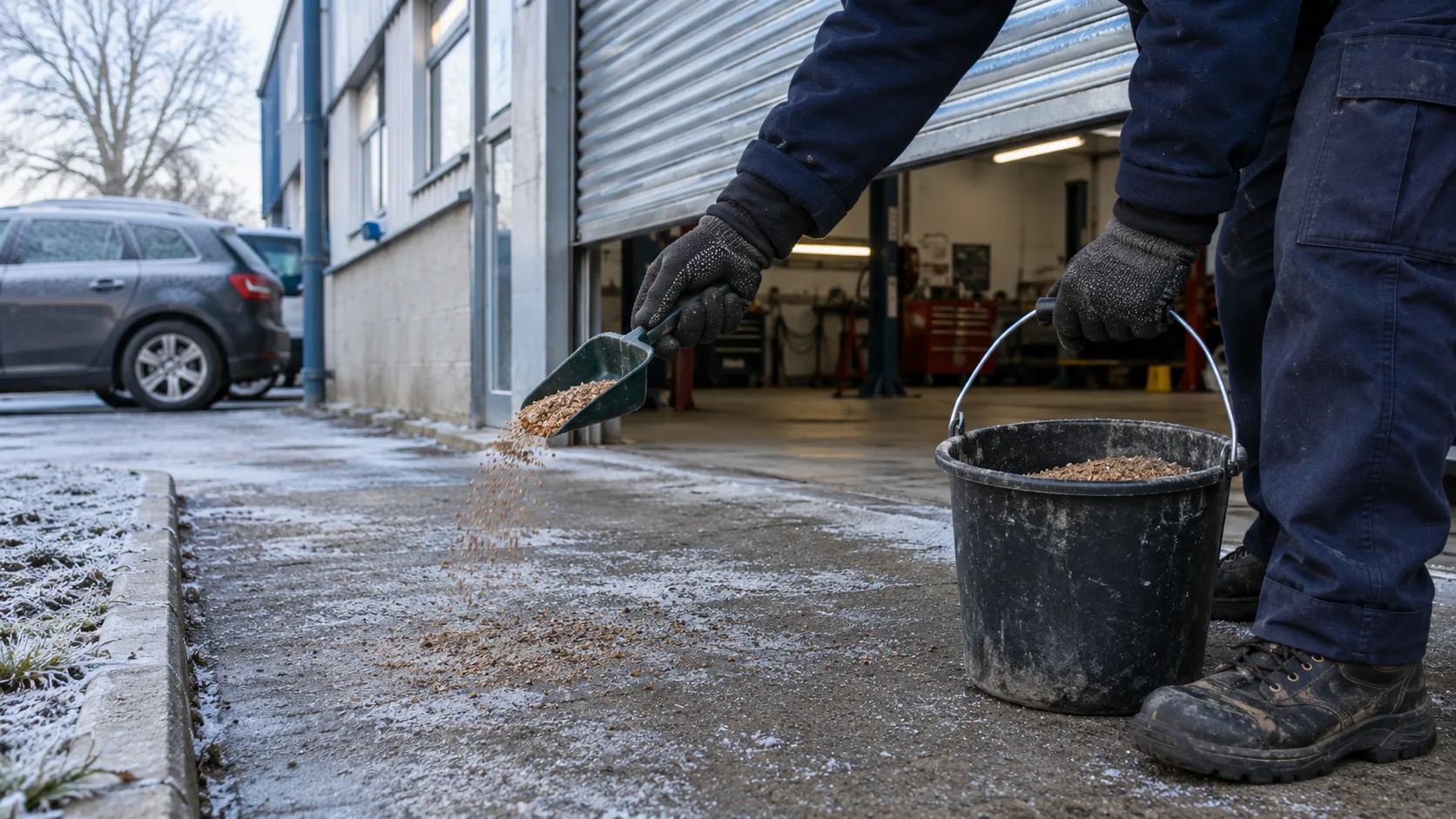
The clocks go back, the school run moves into darkness, and within a few weeks the booking diary starts to tighten. Winter is the accident repair trade's harvest: more hours of driving done in the dark, greasy and icy road surfaces, low sun, and weather that turns ordinary junctions into contact sport. The shops that come through it profitably are rarely the ones that worked hardest in January — they're the ones that did their preparing in November. Here's the checklist worth running before the season properly bites.
Booking discipline and triage
The first casualty of a busy season is usually the diary. Decide now how you'll triage: which jobs get estimated same-day, how far out you're willing to book, and at what point you start declining work rather than quietly stretching every promise you've made. A realistic eight-week book honours more customers than an optimistic four-week one. If you hold insurance contracts, check your key-to-key expectations against your genuine winter capacity, not your August capacity.
Parts, ordered early
Winter work is predictable in its appetite: bumper skins, headlight units, wings, grilles, mirror assemblies. Where you can identify fast movers for the vehicles you see most, get ahead of them — a part on your shelf in December is worth two on a backorder list in January, when every other bodyshop in the country is chasing the same components and lead times stretch accordingly.
Storage that scales with the season
Every extra job is also extra material: the damaged bumper, the shattered light unit, the arch liner that came off in pieces. In summer that tide is manageable; in winter it becomes a pile unless it has somewhere to go. Proper containment — bins, cages and bumper racking, which we supply to collection clients — keeps damaged plastics off the floor, out of the weather and out of the way of paying work. If your current arrangement is "the corner by the fence", fix it before the season does it for you. Our guide to storage equipment covers what suits which volume.
A waste schedule that flexes upward
A collection frequency set in quiet October will be wrong by late January. The useful question to ask your waste contractor now is simple: when my volumes double, what happens? A good answer involves options — weekly, fortnightly, monthly or one-off collections, stepped up when the yard needs it and back down when it doesn't. Our plastic waste collection runs on exactly that basis, with an eWTN issued at every visit, so the paperwork keeps pace with the season as well as the plastic.
Yard space as working capital
Winter fills yards twice over — crash-damaged cars waiting for assessment at one end, finished cars waiting for collection at the other. Walk your site now and be honest about what's occupying space without earning it: the scrap wheels, the dead bumpers, the shelf of parts for cars you no longer see. A pre-season clearance, including a bumper collection for the backlog, buys you the one thing you cannot order in January: room to move.
People, hours and daylight
Finally, the human ledger. Agree overtime expectations before the pressure arrives rather than mid-crisis, check holiday clashes across December and January, and make sure estimating cover exists for your busiest intake days. A prepared team absorbs a hard season; an ambushed one resents it.
Run the list in November and winter becomes what it should be: your most profitable quarter rather than your most chaotic. If the storage and waste lines are the ones still unticked, we can have equipment on site and a schedule in place before the first hard frost — we cover all of Scotland and the North of England, including Carlisle, Penrith, Newcastle, Middlesbrough, York, Leeds, Bradford, Manchester and Liverpool. Get winter-ready with us or call 0141 260 6602.
FAQ
Why does winter produce so much more bodyshop work?
More driving happens in darkness, road surfaces spend months wet, icy or salted, and low winter sun creates glare at exactly the times roads are busiest. None of it takes dramatic crashes — most winter work is low-speed contact: car parks, junctions, shunts in slow traffic. Lots of small impacts, each one a bumper, a light, a panel.
When should winter preparation actually start?
Before the clocks change, ideally — late October into November. Parts ordering, storage and waste scheduling all need lead time, and every bodyshop in the country hits the same pinch points in the same weeks. Preparing in January isn't preparing; it's reacting.
Does road salt or winter grime on damaged plastics cause a problem for recycling?
No. Surface dirt, salt residue and road film are dealt with in processing — collected plastics are hand-stripped and prepared before granulation, so a filthy January bumper ends up in the same PP regrind stream as a clean June one. What matters is that plastics are kept in their own stream rather than mixed through general waste.
Can a collection schedule really change mid-season, or are we locked in?
With us, it changes when your workload does. There's no minimum volume and no fixed commitment to a frequency: a fortnightly round can step up to weekly through the peak and ease back in spring, or a one-off clearance can bridge an unusually heavy month. The schedule exists to serve the yard, not the other way round.