What Your Waste Pile Says About Your Collection Schedule
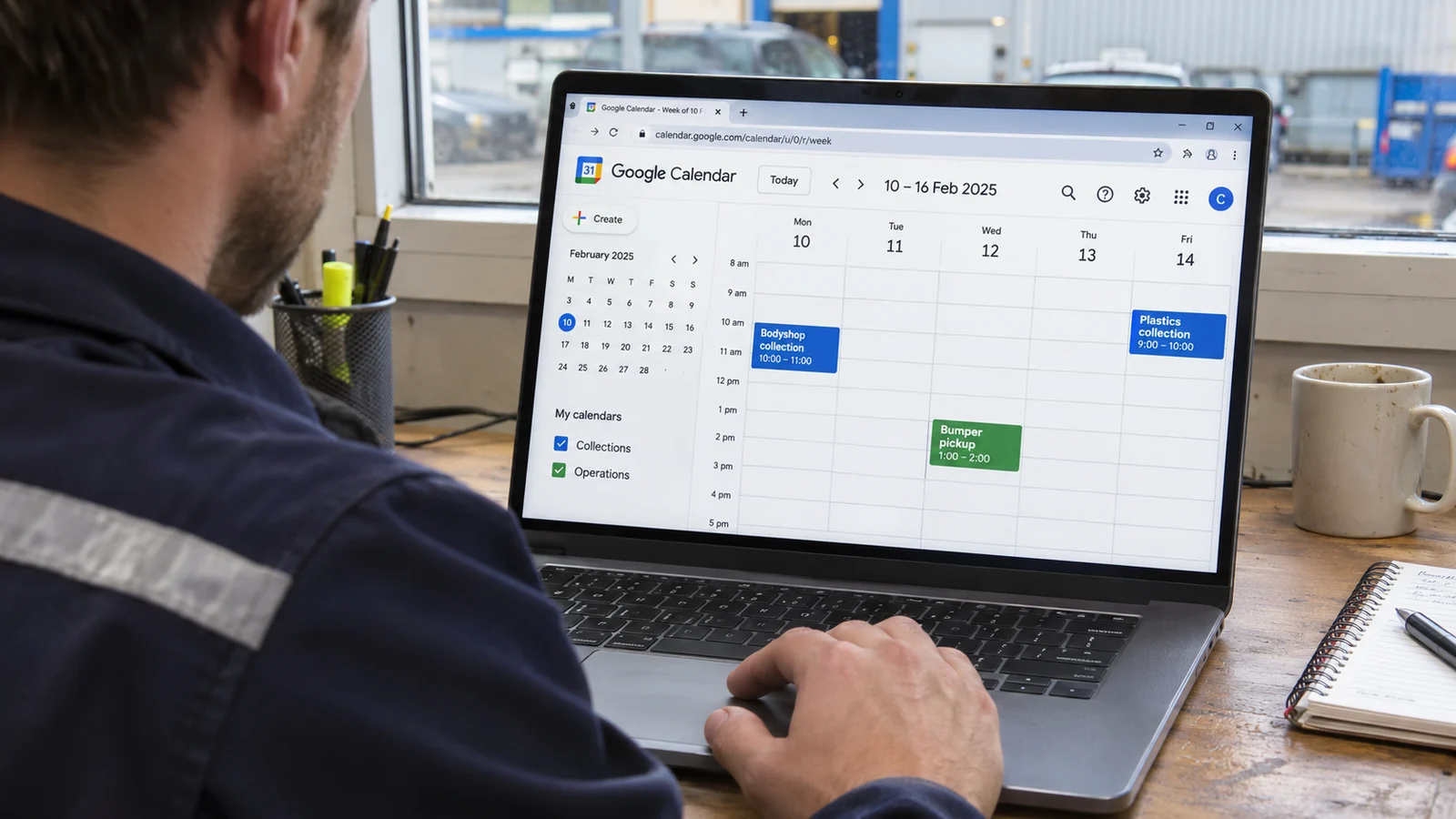
A waste pile is the one report your workshop writes without being asked. It logs your throughput, your sorting habits and your collection frequency more honestly than any spreadsheet — you just have to read it. Walk out to yours and look at it the way a diagnostic tech reads a fault code: the symptom is on the surface, the cause is in the schedule. Here are five readings and what each one is telling you to change.
Reading 1: it overflows before the van arrives
Bumpers leaning against the cage instead of in it, trims stacked on the floor, the last few days' plastic going wherever it fits. The diagnosis is simple: your collection interval is longer than your output deserves. The fix is not more floor space — space feeds the problem — it is a shorter cycle. A shop on monthly bumper collection that keeps bursting its banks is a fortnightly shop in denial; a fortnightly shop doing the same is ready for weekly. Eco Auto Solutions runs weekly, fortnightly, monthly and one-off schedules precisely because output varies this much between sites, and shifts over time within them.
Reading 2: the van keeps collecting half-empty containers
The opposite symptom, and workshops notice it less because nothing is spilling. But a schedule that outpaces your output has its own costs: doors opening for no reason, yard access blocked for a pickup that barely registers, and a standing appointment the team starts ignoring because it never matters. The fix is to stretch the interval until containers arrive at collection day respectably full. With no minimum volume to meet, a lower-output site loses nothing by moving to monthly — the material is collected either way, just at a rhythm that matches reality.
Reading 3: the pile is big enough but the bumpers in it are ruined
Bumpers stored flat under other bumpers deform; trims thrown loose get snapped and scuffed. That matters more than it looks, because a good-condition bumper can be refurbished and resold rather than granulated — value your storage method is quietly destroying. This reading points at equipment rather than frequency: purpose-made bumper racking keeps parts in shape between pickups, and Eco Auto Solutions supplies bins, cages and bumper racking to its collection clients so the material arrives worth what it should be.
Reading 4: odd things are migrating into the plastics cage
A coffee cup here, packaging foam there, eventually a wiring loom. Mixed content is the slowest-moving fault on this list and the most expensive, because contamination degrades the whole stream — clean segregated polypropylene becomes quality regrind, while a polluted cage is just bulk waste with ambitions. The schedule angle is real, though: contamination creeps in when a cage sits too long and becomes "the bin that's always there". A cycle short enough that the cage visibly belongs to a process, not to the yard, keeps the stream honest. Dedicated routes for other streams help too — lamps have their own headlight collection rather than riding along loose with the plastics.
Reading 5: the pile has seasons
Quiet summers, chaotic winters, a hail week that doubles your intake overnight. If your pile swells and shrinks but your schedule never moves, you will be alternately overflowing and under-filling through the year — both of the first two readings, taking turns. The fix is a schedule treated as a setting, not a signature: step up to weekly for the heavy months, back down after, and bolt on a one-off collection when a single event buries you. A backlog that has already got away from you is also just a one-off collection, not a crisis.
Read it, then change one thing
None of these readings calls for a project. Each calls for one adjustment — interval, equipment, segregation or seasonality — and the pile itself will tell you within a cycle or two whether it worked. If you would rather have a second pair of eyes on it, describe your pile to Eco Auto Solutions and we will match a schedule to it: we collect across all of Scotland and the North of England — including Carlisle, Penrith, Newcastle, Middlesbrough, York, Leeds, Bradford, Manchester and Liverpool — on 0141 260 6602 or via our contact page.
FAQ
How do I work out a sensible starting frequency?
Estimate your weekly output in bumpers and plastic volume, then pick the interval at which your containers would arrive at collection day around three-quarters full. Err on the frequent side to start — stepping a schedule down after a few comfortable cycles is easier than digging out from an underestimate.
Can we change the frequency once a schedule is running?
Yes, and you should expect to. Output drifts as work mix changes, and a schedule set once and never revisited will eventually mismatch the site. Reviewing the pile against the calendar every few months is enough to catch it.
Is a bigger container a substitute for a more frequent collection?
Sometimes, but not often. Extra capacity absorbs variation between pickups, which is useful; it does not change your average output, so a genuinely under-scheduled site just fills the bigger container too — while the material sits longer and crush damage and contamination get more time to work.
What should we do with a backlog that built up before any schedule existed?
Treat the clearance and the routine as two separate jobs. A one-off collection resets the yard to zero; the recurring schedule then only has to keep pace with current output, which is a far easier target than catching up and keeping up at once.