ADAS and Bumper Repair: Five Myths, Corrected
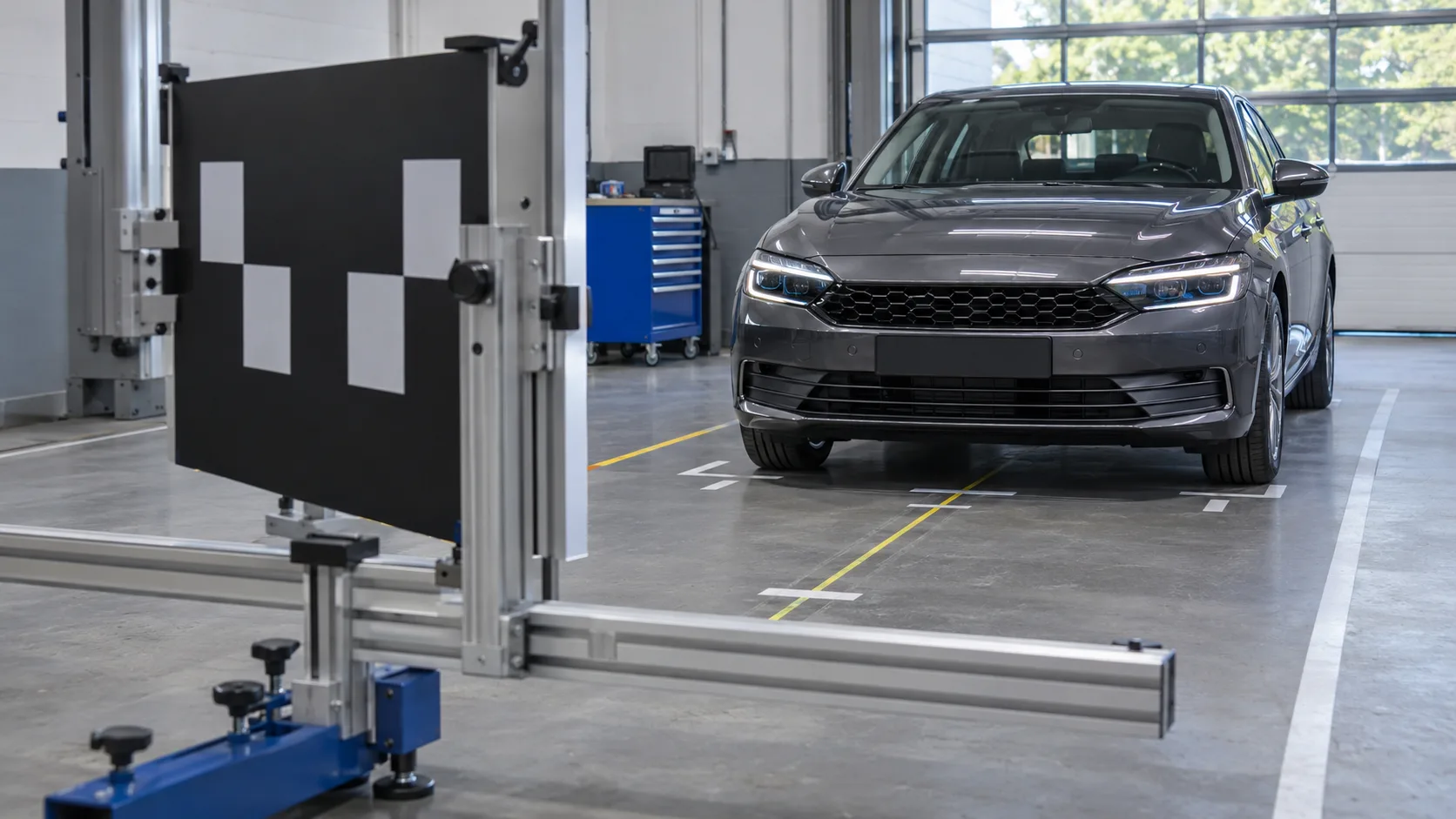
Somewhere in most drivers' heads — and in the odd estimator's too — lives a stubborn belief that the bumper is the cheap bit. A lump of plastic, clipped on at the factory, clipped off in the bodyshop, painted and forgotten. That was broadly true for decades. Then carmakers started hiding the car's senses behind it. Advanced driver assistance systems — ADAS, the collective name for radar cruise control, automatic emergency braking, blind-spot monitoring, parking aids and their relatives — have turned the humble bumper into an instrument housing, and a set of myths has failed to keep up. Here are five worth correcting.
Myth 1: a bumper is just a plastic panel
The skin you can see is indeed a moulded polypropylene panel. But on a current car it is also a mounting station: ultrasonic parking sensors pressed into its face, a radar unit behind the badge or lower grille, sometimes cameras, washer jets, lane-marking surfaces for sensors, plus the absorbers and brackets that manage a low-speed impact. Removing a bumper now means unplugging a small network before anything comes off. The plastic itself hasn't changed much — it's what the plastic carries that has.
Myth 2: a knock that leaves no mark can be ignored
A bumper is designed to take a car-park nudge and spring back. The sensors behind it are less forgiving. A radar bracket shifted a few millimetres, or a sensor nudged fractionally off its axis, can leave a system confidently looking slightly the wrong way — an error that grows with distance. This is why modern repair methods treat "no visible damage" and "no damage" as different statements, and why an inspection behind the skin is part of a proper bumper job rather than an upsell.
Myth 3: calibration is optional
After a bumper has been off, or a sensor disturbed, many manufacturers' repair methods require the relevant systems to be recalibrated — aligned and verified against targets, by someone with the right equipment. Skipping it doesn't make the car unroadworthy in an obvious way; it makes safety systems quietly unreliable, which is worse. Calibration time and kit are a real part of why bumper work costs more than it used to, and a bodyshop that itemises it is doing the job properly, not padding the bill.
Myth 4: if the bumper's involved, the car is doomed
The costs above do push borderline cars toward being written off — a front-end knock that once meant a skin and a blend can now mean sensors, brackets and calibration on top. But most bumper jobs remain exactly that: jobs. Where a car does tip over the line, it usually takes a non-structural category, and understanding what a Cat N marker actually records matters more than fearing it. Sensor-rich damage raises bills; it doesn't bend chassis legs.
Myth 5: all this electronics means the bumper can't be recycled
The opposite. Sensors, wiring, brackets and clips are removable, and removing them is part of the job: bumpers we collect are hand-stripped before granulation, so the electronics leave the stream and the polypropylene goes on to become PP regrind for manufacturing. A sensor-studded skin coming off a repair belongs in a bumper collection cage, not a general skip — and the damaged light units, grilles and liners from the same job have their own routes through a plastic waste collection alongside it. The technology changed the repair; it didn't change the material.
The quiet upshot for bodyshops
More sensor work per job means more bumpers coming off cars rather than being touched up on them — and that means the pile by the back door grows faster than it used to. If yours is growing, we collect across all of Scotland and the North of England, including Carlisle, Penrith, Newcastle, Middlesbrough, York, Leeds, Bradford, Manchester and Liverpool, with bins, cages and bumper racking supplied. Tell us about your volumes or call 0141 260 6602.
FAQ
Which systems actually live in or behind a bumper?
Typically ultrasonic parking sensors in the skin itself, a forward or rear radar behind the centre of the bumper or grille area, and on some cars surround-view cameras and blind-spot radars at the corners. The windscreen camera is the other major ADAS location, but the bumper zone is where low-speed damage and sensitive equipment overlap most often.
Does repainting a bumper affect the radar behind it?
It can. Radar looks through the plastic, and manufacturers specify what that area of the bumper may and may not have on it — certain finishes, excessive paint build-up or the wrong repair materials in the radar's window can attenuate or distort the signal. It's a repair-method detail, and one reason heavily repaired skins are sometimes replaced rather than worked over again.
Who can carry out ADAS calibration — does it have to be a main dealer?
No. Dealers do it, but properly equipped independent bodyshops and dedicated calibration specialists do too. What matters is the right targets and equipment, the manufacturer's procedure, and documented results — not the badge above the door.
Do the sensors taken off a scrapped bumper get reused?
Undamaged units have a value in the used-parts world like any other component, and damaged ones go into electronic waste streams rather than the plastic. From the recycling side, what matters is that they're separated out — which happens during hand-stripping — so the granulated polypropylene stays clean.