Alloy Wheel Recycling: From Kerbed to Re-Melted
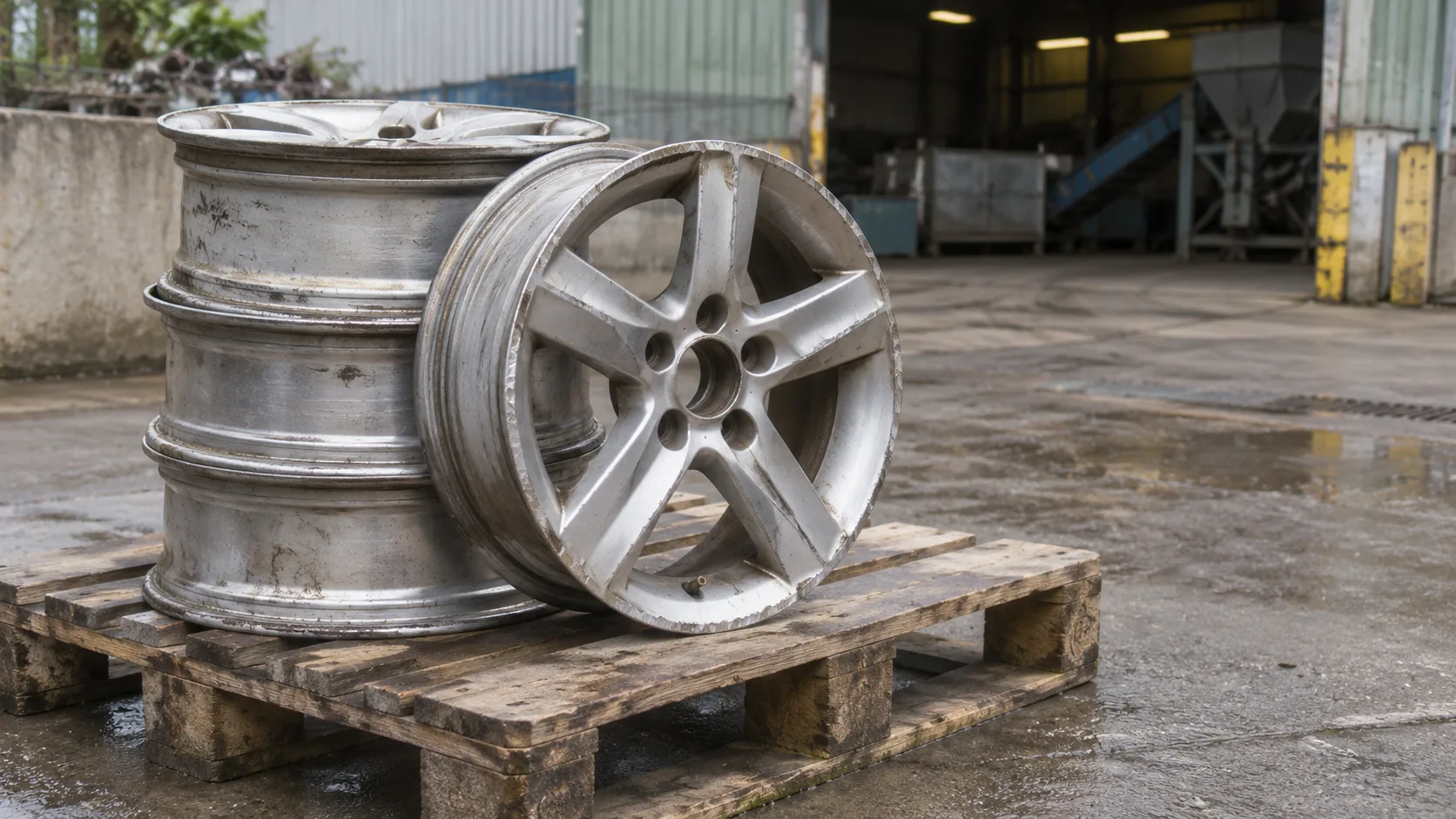
Aluminium has a strange economy. Making it the first time is ferociously energy-hungry — ore, electricity in industrial quantities, smelters built next to their own power supplies. Making it again takes a small fraction of that effort, and the metal doesn't mind how many times you do it. That single fact drives everything that happens to a scrap alloy wheel once it leaves a car. Here is the journey, in six steps.
1. The wheel comes off
Kerb strikes, pothole buckles, corrosion creeping under the lacquer, cracks discovered at a tyre change — wheels leave service constantly, from insurance jobs and routine servicing alike. The first fork in the road is refurbish or scrap. Cosmetic damage — scuffs, kerb rash, a tired finish — is refurbishment territory, and a good wheel should stay in service. Damage to the metal itself — a crack, a buckle, corrosion that has gone beyond the surface — is generally the end of the wheel's road life, and the honest destination is the melt, not the back of a storeroom.
2. It waits — briefly, and properly
A scrap wheel is still controlled waste, so the duty of care that covers your bumpers covers your wheels: a registered carrier, a transfer note, a record kept. Practically, the difference between a wheel stack that works and one that spreads is containment and rhythm — a cage rather than a corner, and a standing alloy wheel collection that rides on the same scheduled visit as your plastic waste collection, so the stack never gets old enough to become furniture.
3. Everything that isn't aluminium leaves
Before any metal melts, the wheel is stripped of its passengers: tyre, valve, pressure sensor, centre cap and — most importantly — balance weights. Weights are the quiet contaminant of wheel recycling, because many are lead, and lead has no place in an aluminium melt. All of this is dealt with during processing; the workshop's only job is to send wheels into the right stream rather than the general skip.
4. Sorting, shredding and shedding the shine
Road wheels are typically cast from aluminium-silicon alloys — a different recipe from the wrought alloys in body panels or drinks cans — so scrap is sorted by family to keep the chemistry usable. The wheels are then fragmented, and their coatings dealt with: paint, lacquer and powder coat are removed or burned off under controlled conditions before melting, because coatings dragged into a furnace mean dross and fumes rather than metal.
5. The melt
In the secondary smelter the fragments become liquid metal again, at that small fraction of the energy primary production demands. The melt is cleaned and degassed, its chemistry measured and adjusted with fresh alloying elements where needed, and the result is cast into ingots — standardised, certified feedstock. Crucially, aluminium comes through this unharmed: unlike many materials, it doesn't degrade with each cycle, which is why the same atoms can keep working indefinitely.
6. Back onto a vehicle — eventually
Those ingots feed foundries, and foundries feed the car industry: engine and transmission castings, brackets, housings — and new wheels among them. Your kerbed wheel won't be reborn as itself, but its metal stays in circulation, very often in automotive use, which is about as close to a closed loop as a scrapyard material gets.
Why the journey is worth running properly
For a garage or bodyshop, the case assembles itself: the material is genuinely valuable, the paperwork obligations are real, and the alternative — wheels drifting out through informal routes or sitting in a corner for a year — delivers neither the value nor the record. If there's a stack in your yard overdue for step two, we collect across all of Scotland and the North of England — put your wheels on the schedule or call 0141 260 6602.
FAQ
Can a cracked wheel be welded instead of recycled?
Cosmetic refurbishment is one thing; structural repair is another. Weld repairs to cracked or buckled wheels are offered, but they sit in contested territory — a repaired crack is hard to certify, and much of the trade treats damage to the metal as terminal. Re-melting recovers the full value of the material with none of the doubt.
Do balance weights and tyre pressure sensors have to come off before collection?
No — stripping out weights, valves and sensors is part of the recycling process, not a job for the workshop. The one thing worth doing on site is keeping scrap wheels in their own cage rather than mixed through other waste, so the whole stack can go into the aluminium stream cleanly.
Does the finish — painted, powder-coated, diamond-cut — affect whether a wheel can be recycled?
No. Every finish ends up removed before the melt, so a flaking painted wheel and a lacquered diamond-cut one are equally welcome in the scrap stream. Finish matters to the refurbish-or-scrap decision, not to recyclability.
Is re-melted wheel aluminium as good as newly smelted metal?
For casting alloys, effectively yes. The melt's chemistry is measured and corrected before casting, and because aluminium doesn't lose its properties through re-melting, secondary metal does the same jobs as primary — which is why aluminium is among the most successfully recycled materials in use.