Repair or Replace? When a Bumper Is Worth Welding
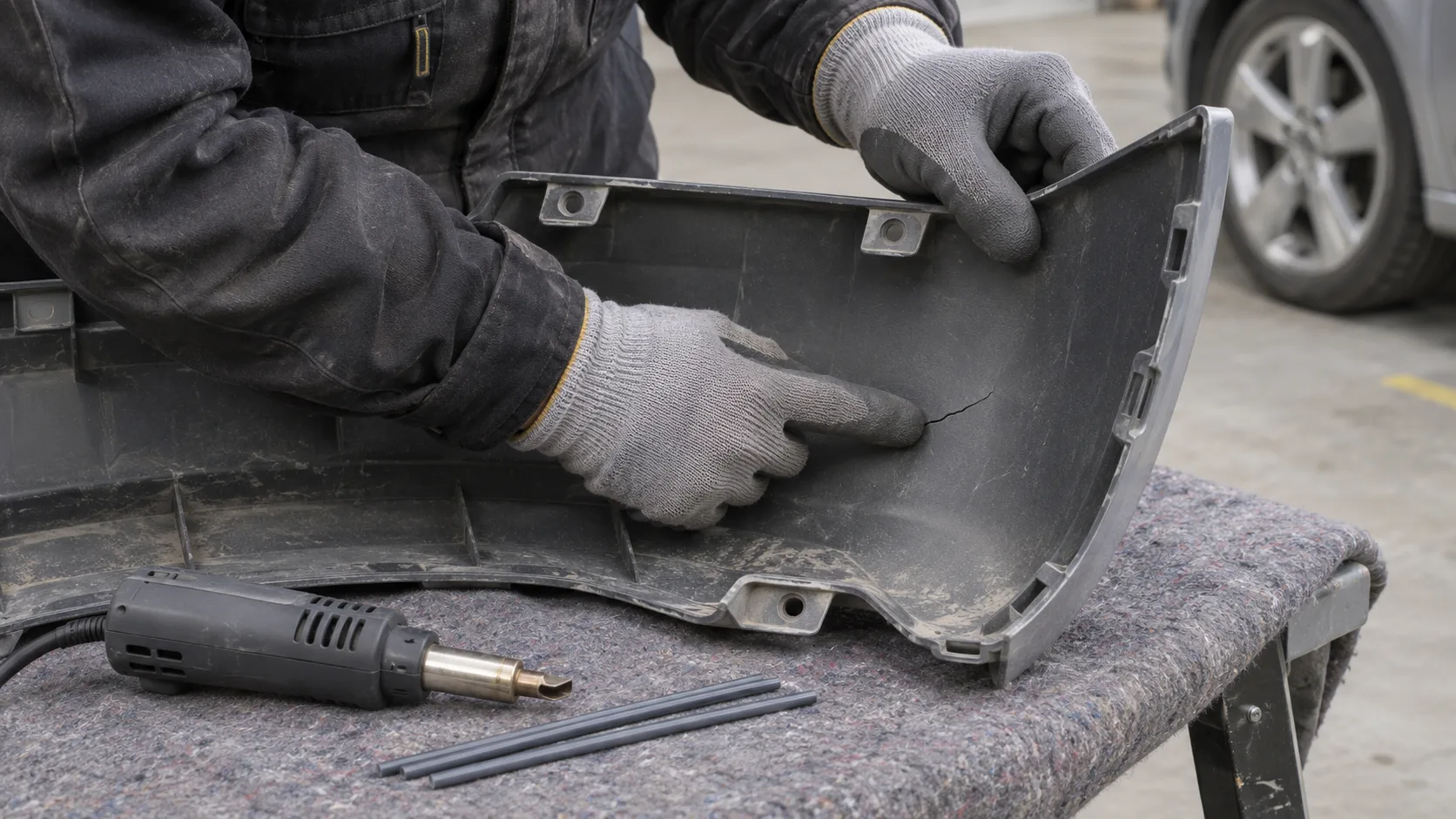
Estimators make this call dozens of times a week, usually in under a minute, and the logic behind it is rarely explained to anyone outside the trade. So here it is, laid out as the questions that actually decide the matter — the same ones a good bodyshop runs through before a bumper either goes on the bench or comes off the car for good.
Can a plastic bumper really be welded?
Yes — because most bumper covers are thermoplastic, overwhelmingly polypropylene or a PP blend. Thermoplastics soften when heated and regain their properties when cooled, which is what makes fusion welding possible: a technician vees out the crack, melts compatible filler rod into it from both faces, and the repair becomes part of the panel rather than a patch stuck to it. Done properly, with the right rod for the right polymer, a welded crack is a legitimate structural repair of the cover. What can't be welded are thermoset and composite materials, which char rather than melt — one reason the first job in any bumper repair is identifying what the part is actually made of.
When is repair the right call?
When the damage is local and the rest of the panel is sound. A single clean crack away from the mounting points, a split with both edges present and undistorted, a scuffed corner, a small puncture — these suit welding, particularly where the technician can get to the back face to reinforce the repair. Repair also wins when the panel itself is the hard part to replace: an unusual colour that would need blending across adjacent panels anyway, or a cover for an older vehicle where a new part means a wait.
When does replacement win?
When damage is spread rather than local. Multiple cracks, a cover that has creased or stretched out of shape, splits running into the mounting edges, or a constellation of broken fixing tabs all push the labour time past the point where a replacement part — new, or a good refurbished cover — costs less than the hours. Replacement is also the safer call when the impact has disturbed what sits behind the cover: absorbers, brackets and carriers do real work in the next impact, and a cosmetically weldable cover can hide a deformed structure behind it.
What about sensors and driver-assist systems?
Modern bumpers are instrument housings as much as styling panels. Parking sensors, and on many cars radar units, sit in or directly behind the cover, and they care about material thickness and consistency in ways a purely cosmetic repair never had to. A weld or filler build-up in the wrong zone can affect how a sensor reads through the panel, and either route — repair or replacement — can mean recalibration afterwards. A bodyshop working to a recognised repair method will check the sensor zones before promising a weld.
Does the insurance context change the answer?
It frames it. On an insurance repair, the estimate is negotiated against repair methods and times, and a justified repair that saves a part keeps the claim cost down — one reason insurers generally like to see bumpers repaired where it's sound to do so. It's worth remembering that bumper damage on its own is classic cosmetic territory: the kind of damage that, on a heavily damaged car, belongs to the cosmetic end of the write-off scale rather than the structural one — the difference explained in our guide to Cat N and Cat S write-off categories.
And the bumper that loses the argument?
It shouldn't go in a skip. A replaced PP cover is exactly the material recyclers want: large, mostly single-polymer, easy to identify. Through our bumper collection service, Eco Auto Solutions takes replaced bumpers from bodyshops, hand-strips the fittings and granulates the plastic into PP regrind that goes back into manufacturing — nothing to landfill. Covers that come off in good condition are refurbished and resold instead, which is the best outcome of all.
Whether your workshop welds them or swaps them, the offcuts and casualties have somewhere to go: we collect across all of Scotland and the North of England. Ring 0141 260 6602 or arrange a collection.
FAQ
How do I know what my bumper is made of before repairing it?
Check the back face of the cover: most carry a moulded material stamp such as PP, PP/EPDM or ABS near the edge or a mounting point. That marking tells the technician which filler rod is compatible — welding PP rod into an ABS panel, or vice versa, produces a joint that looks finished and fails early.
Can split mounting tabs be repaired, or is that always a replacement?
Tabs can often be rebuilt — welded, or reinforced with mesh bonded into the back face — and for one or two broken tabs that's routine work. The call changes when several tabs have gone or the surrounding plastic is stressed white, because a cover that can't locate firmly will flex, misalign and crack again at the repair.
Is a properly welded bumper as strong as the original?
A sound fusion weld in a thermoplastic cover restores strength at the joint to a level suitable for the panel's job, which is why recognised repair methods allow it. What a weld can't restore is a panel that has stretched or taken multiple impacts — strength at the crack is not the same as a panel that behaves as new overall, and that's exactly the judgement the repair-or-replace decision exists to make.
Why was my bumper replaced when the damage looked minor?
Usually because of what the surface didn't show: cracks running into mounting edges, damage in a sensor zone, a deformed absorber behind the cover, or paint and blending time that made repair the dearer route. Estimates are built on method times, so when a shop replaces rather than repairs, it's normally because the arithmetic — not the appearance — said so.