Duty of Care for Bodyshop Waste in Scotland: The Obligations Every Garage Holds
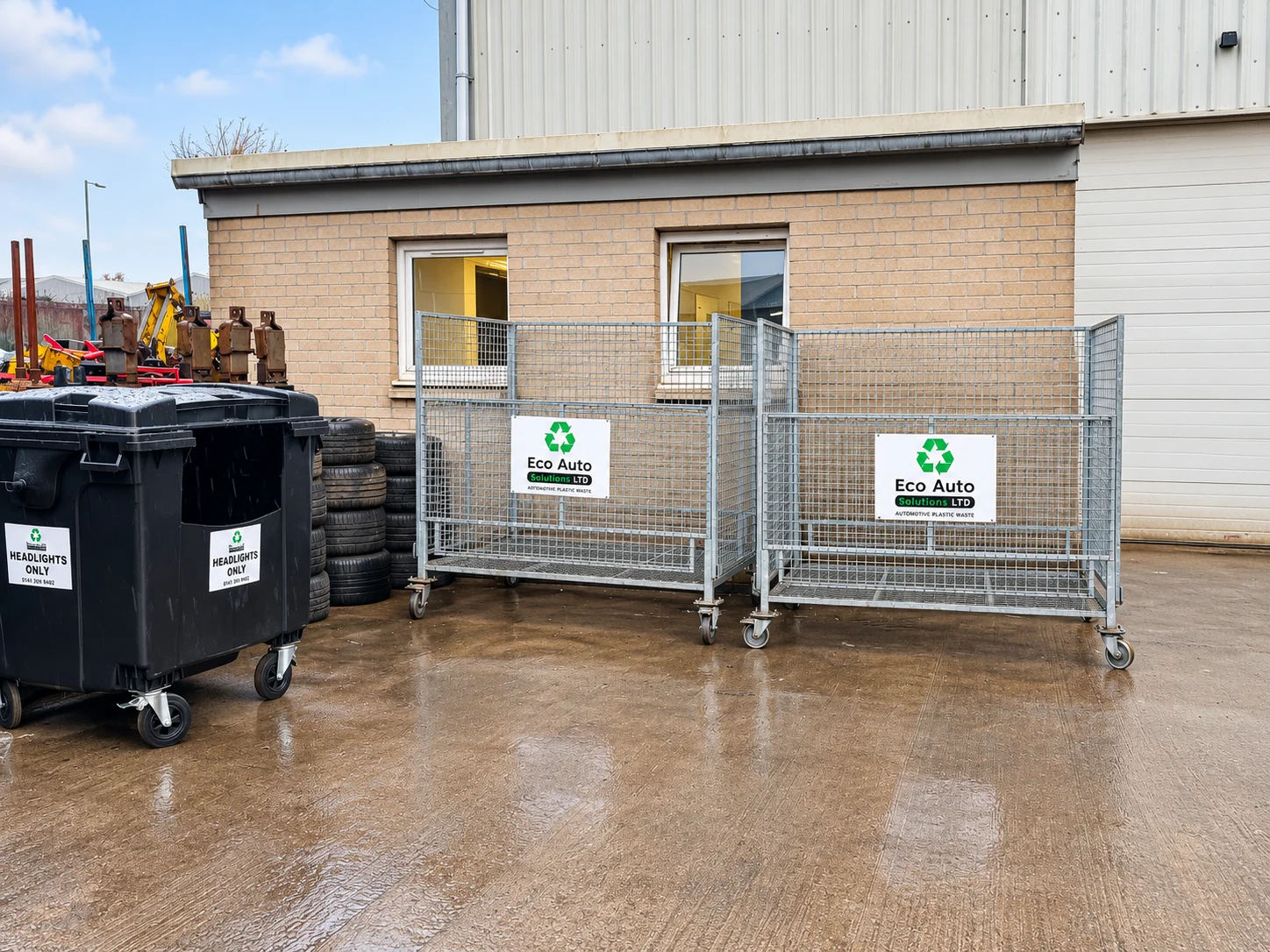
If your bodyshop produces waste — and every bodyshop does — the law places a duty of care on you for that waste. Not on your waste carrier. Not on the recycler at the end of the chain. On you, from the moment a bumper comes off a car to the moment it is handed over properly, with the right paperwork, to someone legally entitled to take it.
Most garage owners know the phrase "duty of care". Fewer could say exactly what it requires. Here is what it means in practice for a Scottish workshop.
Where the duty comes from
The duty of care sits in section 34 of the Environmental Protection Act 1990, and it applies in Scotland just as it does south of the border. In Scotland, the regulator overseeing how waste is handled is SEPA — the Scottish Environment Protection Agency.
In plain terms, the duty says that anyone who produces, keeps or passes on waste must take reasonable steps to make sure it is stored safely, described accurately, and transferred only to someone authorised to take it, with a written record of the transfer. The duty follows the waste: handing it to a carrier does not hand over your responsibility if you failed to check who you were handing it to.
Your bumpers and trims are controlled waste
Bumpers, headlights, wheel arch liners, side skirts, trims and grilles coming off repair jobs are controlled waste once you no longer want them. That classification is what brings the duty of care into play — it does not matter that the material is clean, recyclable plastic rather than anything hazardous.
This is where many bodyshops are caught out: the paint tins get treated carefully because they feel like "real" waste, while the pile of plastic in the corner of the yard gets forgotten — but legally, it carries the same obligations.
Obligation one: check your carrier is registered
You must only pass waste to a registered waste carrier, and the onus is on you to check. Checking takes minutes: SEPA maintains a public register of waste carriers, searchable by name or registration number.
Eco Auto Solutions is a SEPA-registered waste carrier — registration WCR/R/3021810, valid across Scotland, England and Wales — and we encourage every customer to look us up before the first collection. A carrier who hesitates when you ask for their registration number is telling you something. Make the check part of how you vet anyone offering bumper collection or any other waste service.
Obligation two: get a transfer note, every time
Every transfer of waste needs a waste transfer note: a written record of what was passed, when, by whom and to whom. The standard to work to is keeping those notes for two years, so that if SEPA ever asks how your waste left site, you can show them.
We issue an electronic waste transfer note (eWTN) at every collection, before our driver leaves your yard. There is nothing to chase afterwards and nothing to file by hand — your record exists the moment the waste does not.
Obligation three: store waste properly while it waits
The duty of care covers waste while it is still on your premises. Reasonable storage means keeping it contained and secure, not drifting across the yard or mixing with general rubbish where it can be contaminated or lost.
We supply bins, cages and bumper racking to our collection clients, so bumpers and plastics are stored off the floor and in one place between visits. Tidy storage is not just a compliance point — it also keeps the material clean and single-stream, which is exactly what our plastic waste collection service is built around, and it is why the material we collect goes on to become quality PP regrind rather than landfill.
Making the duty of care the easy part of your week
A compliant waste route should not be a burden. With Eco Auto Solutions it looks like this: a verifiable SEPA-registered carrier, collections weekly, fortnightly, monthly or as a one-off with no minimum volume, supplied storage equipment, and an eWTN in your records before the driver pulls away. Your obligations are met as a by-product of a service that simply turns up when it says it will.
Ready to put your bodyshop's duty of care on autopilot? Get in touch through our contact page or call us on 0141 260 6602.
FAQ
Does the duty of care apply even though bumpers aren't hazardous waste? Yes. Bumpers, trims and other automotive plastics are controlled waste once discarded, and the duty of care under section 34 of the Environmental Protection Act 1990 applies to controlled waste regardless of whether it is hazardous.
How do I check a waste carrier is genuinely registered? Search SEPA's public register of waste carriers by company name or registration number. Our registration is WCR/R/3021810, and any legitimate carrier will give you theirs without hesitation.
How long should I keep waste transfer notes? Work to a two-year retention standard. Because we issue an electronic waste transfer note at every collection, your records build themselves — nothing handwritten, nothing lost.
Am I still responsible once the waste leaves my yard? Your duty is to take reasonable steps: accurate description, proper storage, a registered carrier and a transfer note. Do those things and you have discharged your duty of care; skip the checks and responsibility can follow the waste.