Electric Vehicles in the Bodyshop: What Changes, What Doesn't
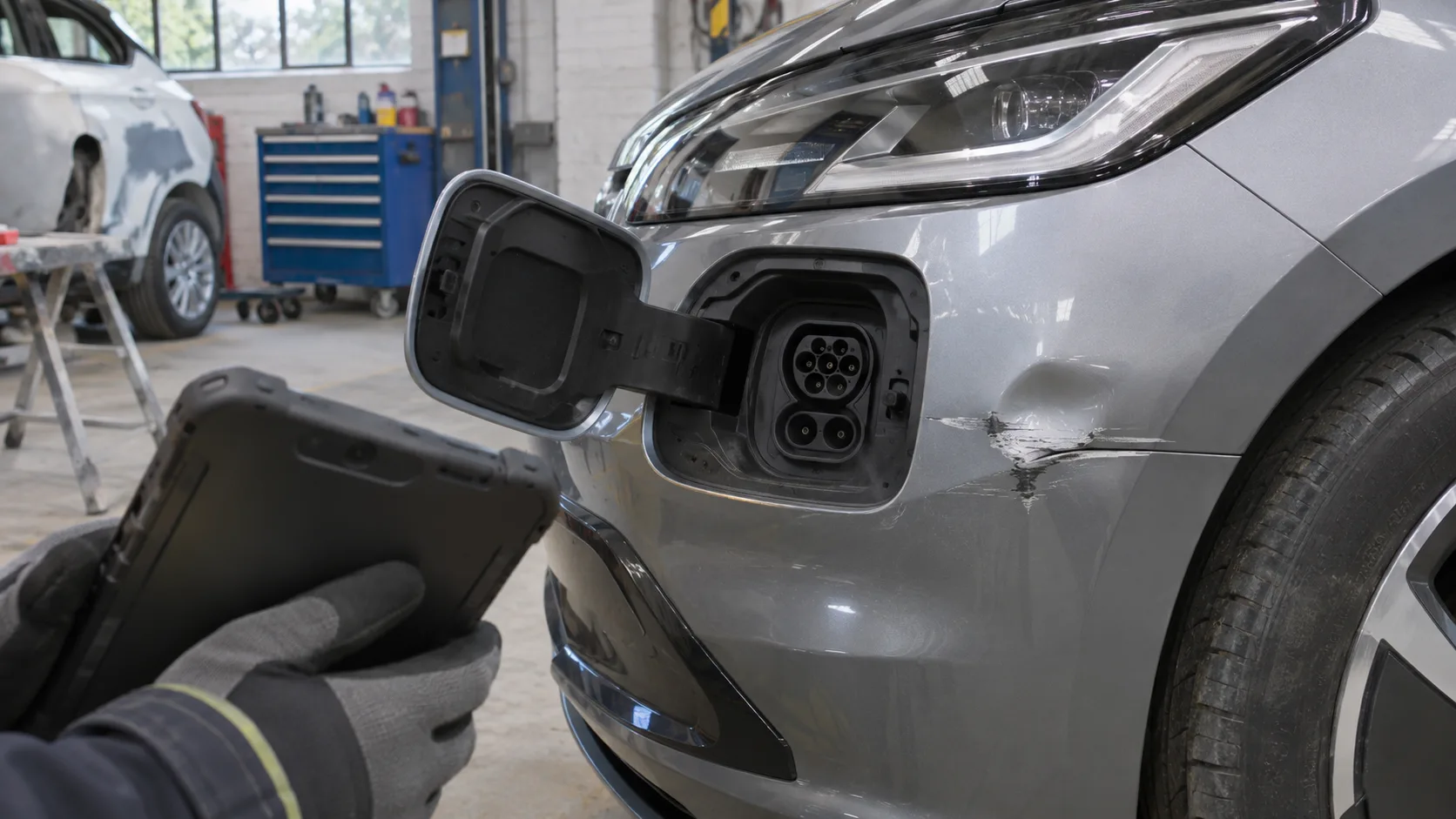
Walk around an accident-damaged electric car and most of what you see is familiar. A scuffed bumper skin, a cracked headlight, a creased wing, an arch liner hanging loose — the outside of an EV crashes exactly like the outside of anything else. The differences live underneath, and for bodyshops, insurers and recyclers they are reshaping the job in quieter ways than the headlines suggest. Here's the honest side-by-side.
The surface: business as usual
An EV's cosmetic skin is made of the same materials the trade has handled for years — polypropylene bumpers, plastic grilles and trims, wheel arch liners, side skirts. If anything, electric platforms lean on plastic more heavily, using aerodynamic underbody panelling and aero trim to chase range. For recycling, that's good news twice over: the familiar streams still apply, and there's more material per car to put into them. The damaged plastics coming off an EV repair go into the same plastic waste collection as everything else in the yard, and end up as the same PP regrind.
Underneath: where the job diverges
| Petrol / diesel | Electric | |
|---|---|---|
| Safety before work starts | Disconnect battery, standard precautions | High-voltage system must be made safe by someone trained to do it, before anyone else touches the car |
| Who can do the work | Any competent bodyshop | Shops with EV training, suitable equipment and manufacturer repair methods |
| Structure | Mostly steel, section-by-section repair methods | More aluminium and large castings; some structures are replace-only under manufacturer methods |
| Sensors and calibration | Increasingly present | Near-universal — cameras and radar behind the very panels that get hit, with recalibration after repair |
| The expensive component | Engine rarely touched in a typical knock | Battery sits low and wide, and any suspicion of damage to it changes the whole claim |
| Workshop handling | Park it anywhere | Damaged EVs often need quarantine space while battery condition is confirmed |
None of these rows makes EV repair impossible — the industry is adapting fast — but each adds cost, equipment or caution to jobs that were once routine, and together they explain the pattern insurers are wrestling with.
The write-off arithmetic
Repair cost decides write-offs, and EVs push on that lever from several directions at once: specialist labour, replace-only structural parts, calibration time, and above all a battery whose value can rival the rest of the car. The result, reported across the industry, is that electric cars can be written off after damage that a petrol equivalent would have shrugged off — sometimes while nearly new. Many of those cars take non-structural categories, which makes understanding what a Cat N marker does and doesn't tell you more relevant to EV buyers than to anyone else. It also means a growing flow of young, well-specced vehicles into salvage — a parts and materials opportunity the trade is only beginning to organise.
What it means for the recycling end
From where we stand — collecting from accident repair centres across all of Scotland and the North of England — the EV transition changes volumes more than it changes the work. Bumpers are still bumpers; a bumper collection cage fills with the same polypropylene whether the car it came off was charged or fuelled. The battery has its own specialist world, properly separate from ours. But the plastics, lights and trim of the electric fleet will need the same disciplined routes the petrol fleet needed, in greater quantity, and bodyshops that set those routes up now won't have to improvise later. If that conversation is worth having for your site, we're easy to reach on 0141 260 6602.
FAQ
Can any bodyshop repair an electric car?
Legally the bar is competence, but practically it means trained technicians, the right equipment and access to the manufacturer's repair methods — high-voltage systems are unforgiving of improvisation. Insurers increasingly route EV claims to shops that can evidence all three, so capability here is becoming a commercial question, not just a safety one.
Are EVs really more likely to be written off than petrol cars?
The pattern reported across the repair and insurance industries is that EVs are written off more readily for equivalent visible damage, driven by battery value, replace-only parts and specialist labour. It isn't universal — a cosmetic knock on an EV is still just a cosmetic knock — but the economic threshold sits lower whenever the battery or structure is in question.
Is there anything different about recycling EV bumpers and trim?
No — the bumper skins, liners and trims on electric cars are the same polymer families as on any other modern car, and they go through the same hand-stripping and granulation into regrind. The one practical difference is quantity: EV platforms tend to carry more plastic, especially underneath, so the stream per car is often larger.
What happens to the battery when an EV is written off?
It enters a specialist chain of its own: assessed, made safe, and then either reused, repurposed for second-life storage, or broken down for material recovery, depending on its condition. It never belongs in a general salvage or plastics stream, which is why damaged EVs are quarantined until the battery's state is known.