Plastic Recycling Myths That Deserve to Die
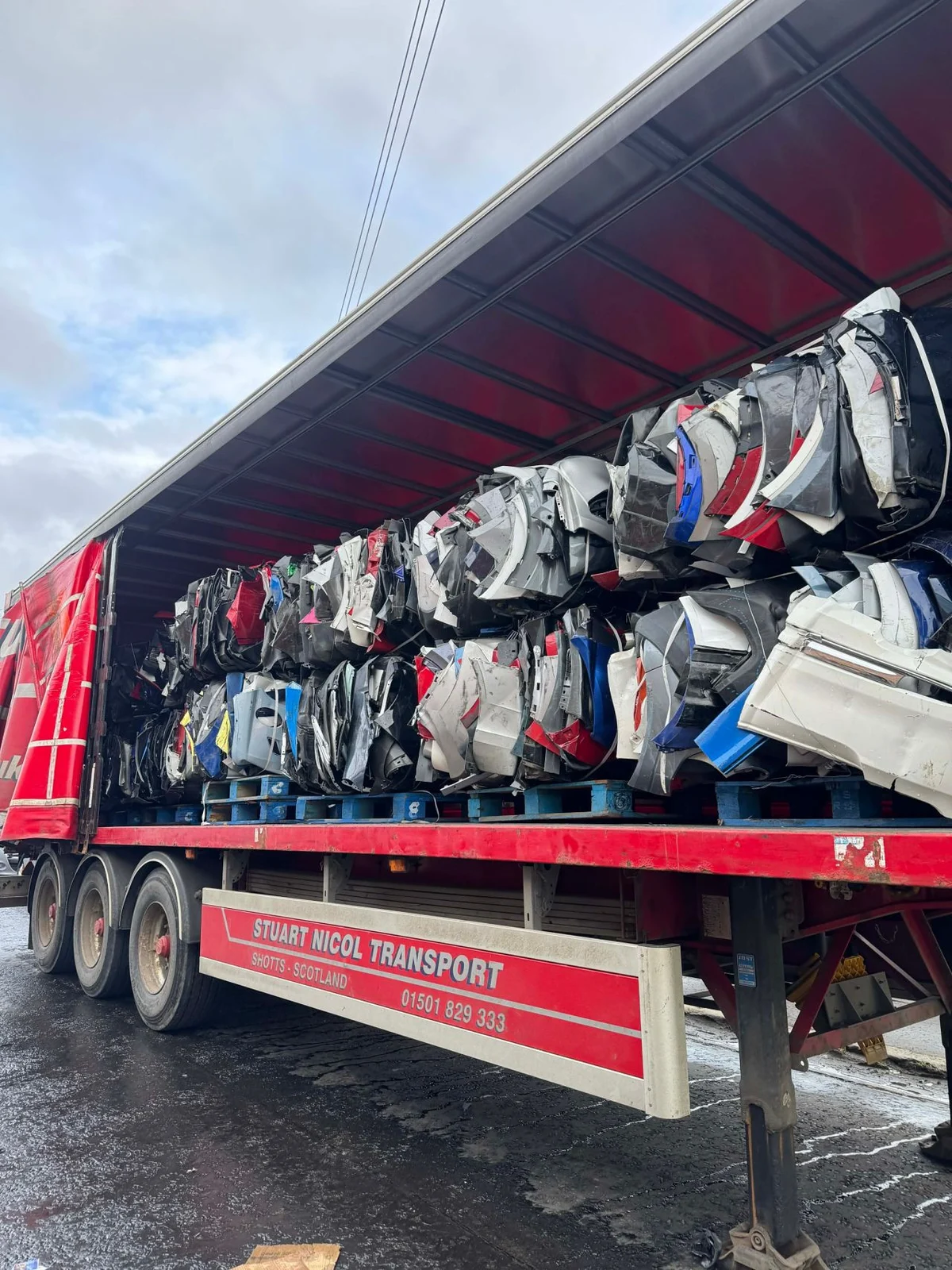
"It all goes to landfill anyway, so why bother?" You hear it in workshops, in pubs, and occasionally from people who should know better. Cynicism about plastic recycling is widespread — but most of the claims that get repeated are simply wrong, and in a trade that produces plastic by the tonne, believing them leads to bad decisions. Here are six myths worth burying, with the reality alongside each one.
Myth 1: "It all ends up in landfill anyway"
Reality: what happens to plastic depends almost entirely on which stream it enters, and the streams vary enormously. Mixed household plastic is the hard case that built this myth. Industrial streams are a different world: when a recycler receives a single, known material in volume — automotive bumpers, for instance, which are overwhelmingly polypropylene — reprocessing it is a routine manufacturing operation, not a gesture. At Eco Auto Solutions, collected plastics are hand-stripped, granulated into PP regrind and supplied back into manufacturing, with nothing going to landfill. The myth confuses the hardest version of the problem with the whole of it.
Myth 2: "Plastic can only be recycled once"
Reality: polymer chains do shorten a little with each heat cycle, which is where this half-truth comes from. But polypropylene in particular tolerates reprocessing well, and a clean, well-sorted stream can go around several times — with recyclers and compounders managing quality along the way, often by blending regrind to the specification a product needs. "Once and done" describes badly contaminated material, not PP that arrived as a known, single-polymer stream.
Myth 3: "Black plastic can't be recycled"
Reality: this one has a real root. The optical sorters used on household recycling lines struggle to identify black plastic on a conveyor, so black packaging has historically slipped through. But that is a limitation of one sorting technology, not of the material. A black bumper is still polypropylene, and in a dedicated automotive stream — where sorting is done by people who know exactly what they're handling, not by a camera watching a conveyor — its colour is irrelevant. Black bumpers granulate into regrind just as readily as silver ones.
Myth 4: "Recycled plastic is always second-rate"
Reality: quality tracks the input, not the label. Regrind made from mixed, dirty feedstock is poor; regrind made from a single polymer, stripped of fixings and contamination before granulation, performs well across a wide range of manufacturing applications. "Recycled" describes where the material came from, not how good it is.
Myth 5: "Sorting is pointless — just skip it all together"
Reality: mixing is precisely what kills recyclability. Polymers that melt at different temperatures cannot be reprocessed together, so a skip of mingled plastics, metal and rubbish is worth less than its parts — often nothing. Keeping automotive plastics as their own stream is what keeps them recyclable, which is why a dedicated plastic waste collection for bumpers, trims, liners and grilles beats a general skip every time. The sorting a workshop does at source is the single biggest factor in what the material becomes.
Myth 6: "Recycling plastic burns more energy than it saves"
Reality: virgin polymer starts life as oil and gas and passes through energy-hungry chemical processing before it ever becomes a pellet. Mechanical recycling — shredding, washing, granulating — skips nearly all of that, which is why reprocessed polymer generally carries a substantially lighter energy burden than its virgin equivalent. The comparison isn't close enough to be controversial among people who make plastic for a living.
The pattern behind the myths
Notice what the six have in common: each takes a genuine weakness of mixed household recycling and stretches it over the entire subject. Single-stream industrial recycling — the kind a bumper collection feeds — was never the problem. If your workshop's plastic is heading somewhere vague, make it the exception: arrange a collection or call 0141 260 6602, and we'll put your bumpers, headlights and plastics on a documented route to regrind, across all of Scotland and the North of England.
FAQ
Why is automotive plastic easier to recycle than household plastic?
Because it arrives as a large volume of known material. Bumpers and most exterior trim are predominantly polypropylene, so a dedicated automotive stream behaves like a single-polymer feedstock — no guessing, minimal sorting losses, and a consistent regrind at the end.
Does paint on a bumper stop it being recycled?
No. Painted bumpers are standard feedstock for automotive plastic recycling; the industry's reprocessing routes are built around the fact that most bumpers arrive painted. What matters far more is that bumpers reach the recycler as a clean, separate stream rather than buried in mixed waste.
How many times can polypropylene realistically go around?
There's no fixed number, because it depends on the cleanliness of each cycle and the demands of the next application. Well-managed PP survives multiple cycles, with compounders adjusting blends to hit the required specification each time.
Is granulated regrind the same as recycled pellets?
Regrind is the granulated flake produced directly from shredded parts; some manufacturers use it in that form, while others have it compounded and re-pelletised first. Both are mechanical recycling — the polymer is reused as polymer, rather than being burned or buried.