Recycled Polypropylene vs Virgin Polymer: How They Compare in Manufacturing
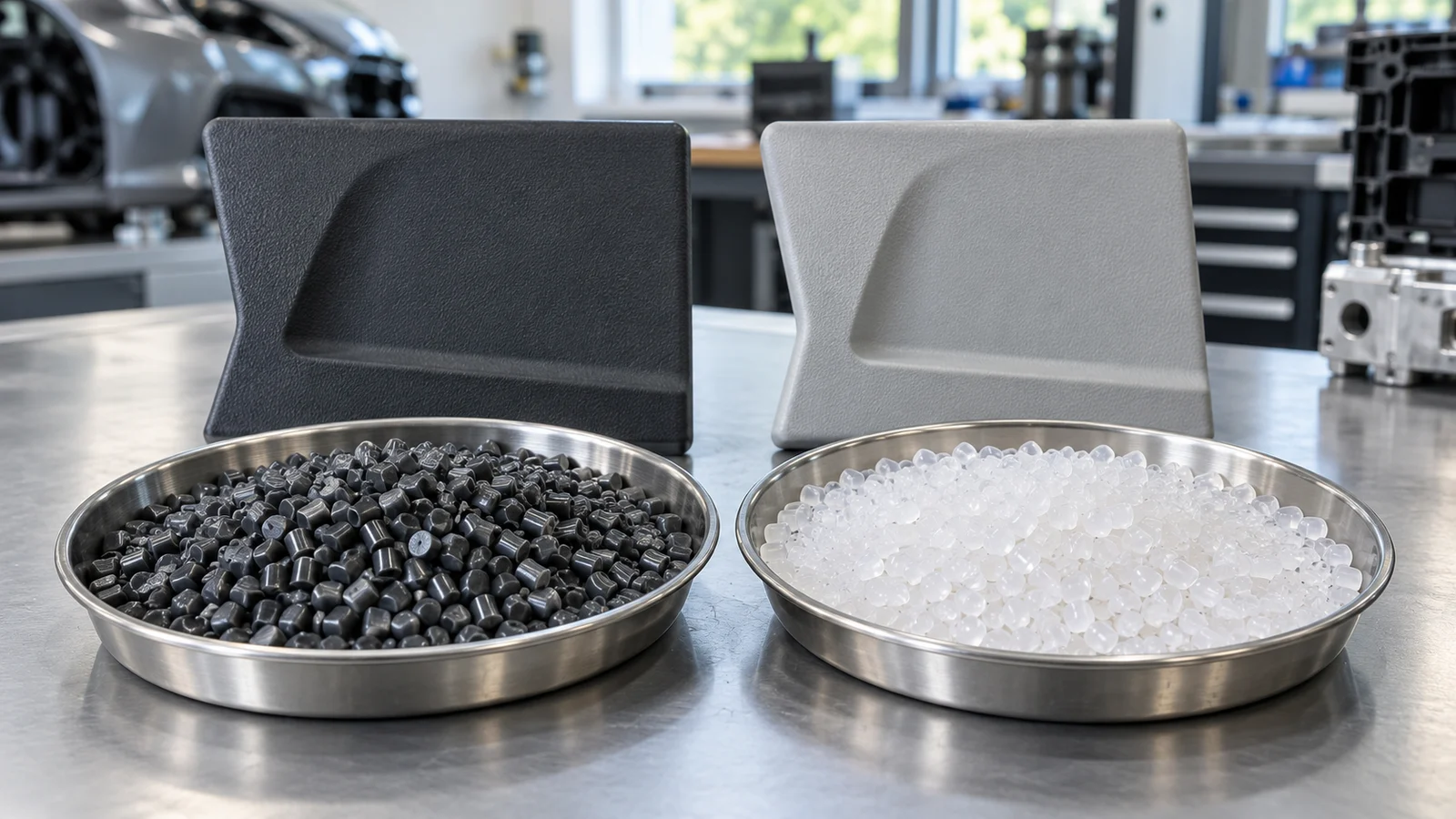
Polypropylene is everywhere in manufacturing — and for decades the default assumption was that serious production needed virgin polymer, straight from the petrochemical supply chain. That assumption is weakening. Recycled polypropylene has moved from a compromise material to a credible feedstock, and for many applications the real question is no longer whether to use it, but where it comes from and how consistent it is. Here is how the two materials actually compare from a manufacturer's point of view.
What each material is
Virgin polypropylene is newly made polymer, produced from fossil feedstocks and supplied as fresh pellet. Its appeal is predictability: every batch arrives with known properties, because nothing has happened to it yet.
Recycled polypropylene — PP regrind — is polymer recovered from products that have already lived a life. The plastic is sorted, stripped of non-plastic components, and granulated into flakes that manufacturers use in place of, or blended with, virgin pellet. Chemically it is the same family of material; the difference lies in its history, and in how carefully that history has been managed.
Where the comparison is really decided: the feedstock
The honest answer to "is recycled PP as good as virgin?" is: it depends entirely on what went into it. Regrind made from mixed post-consumer plastic of unknown origin is a lottery — different polymer grades, colours, additives and contaminants all blended together. Regrind made from a single, known stream of one product type is a different proposition altogether.
Automotive plastic is one of the best single streams there is. Bumpers, in particular, are predominantly polypropylene, produced to demanding automotive specifications in the first place. When bumpers are collected separately — rather than buried in general waste — and hand-stripped of fixings and unwanted components before granulation, the result is a clean, consistent PP stream. That is exactly how material from our bumper collection rounds is processed: sorted, stripped by hand, and granulated into PP regrind supplied back into plastics manufacturing, with nothing sent to landfill.
How they compare on the factory floor
On consistency, virgin polymer starts with the advantage, but well-managed single-stream regrind narrows the gap to the point where many manufacturers run it confidently, either alone or blended with virgin material to hit a precise specification. The key is knowing the source: a regrind supplier who can say exactly what the input was — and what was removed from it — gives a buyer something close to the predictability of virgin pellet.
On supply, virgin polymer is tied to petrochemical markets and their price movements. Regrind draws on a steady domestic stream of material that the automotive repair sector produces every working day, which makes it a useful hedge as well as a material choice.
On sustainability, the comparison is not close. Every tonne of regrind used is a tonne of virgin polymer that did not need to be produced, and a tonne of durable plastic that did not go to landfill or incineration. For manufacturers facing customer and supply-chain pressure to demonstrate recycled content, PP regrind is one of the most practical routes to it — polypropylene tolerates reprocessing well, which is part of why it is such a strong candidate for recycling in the first place.
Where the regrind comes from matters to garages too
For bodyshops and garages, this comparison is the answer to a fair question: what actually happens to the plastic that leaves the yard? Material from our plastic waste collection service — arch liners, skirts, trims and grilles alongside bumpers — feeds this exact process. The plastic a workshop hands over does not disappear; it re-enters manufacturing as usable polymer. That is the "Recycling" in Recycling, Reusing, Reinventing Value.
Eco Auto Solutions collects across all of Scotland and the North of England as a SEPA-registered carrier (WCR/R/3021810, valid across Scotland, England and Wales). Whether you have plastic to collect or regrind requirements to discuss, contact us or call 0141 260 6602.
FAQ
Is recycled polypropylene as strong as virgin polymer? It can perform very closely when the feedstock is a clean, single stream and contamination is removed before granulation. Many manufacturers use quality regrind alone or blended with virgin pellet to meet a target specification.
Why is automotive plastic such good feedstock for regrind? Because it is dominated by one polymer — polypropylene — made to automotive specifications, and because items like bumpers can be collected as a separate stream rather than mixed with other waste.
What is removed from bumpers before granulation? Fixings, fittings and other unwanted components are stripped out by hand before anything reaches the granulator, so the flake that comes out is plastic and only plastic.
Does using regrind actually reduce environmental impact? Yes — each tonne of regrind used displaces virgin polymer production and keeps durable plastic out of landfill. Nothing Eco Auto Solutions collects is sent to landfill.