Inside a UK Salvage Auction: The Journey of a Written-Off Car
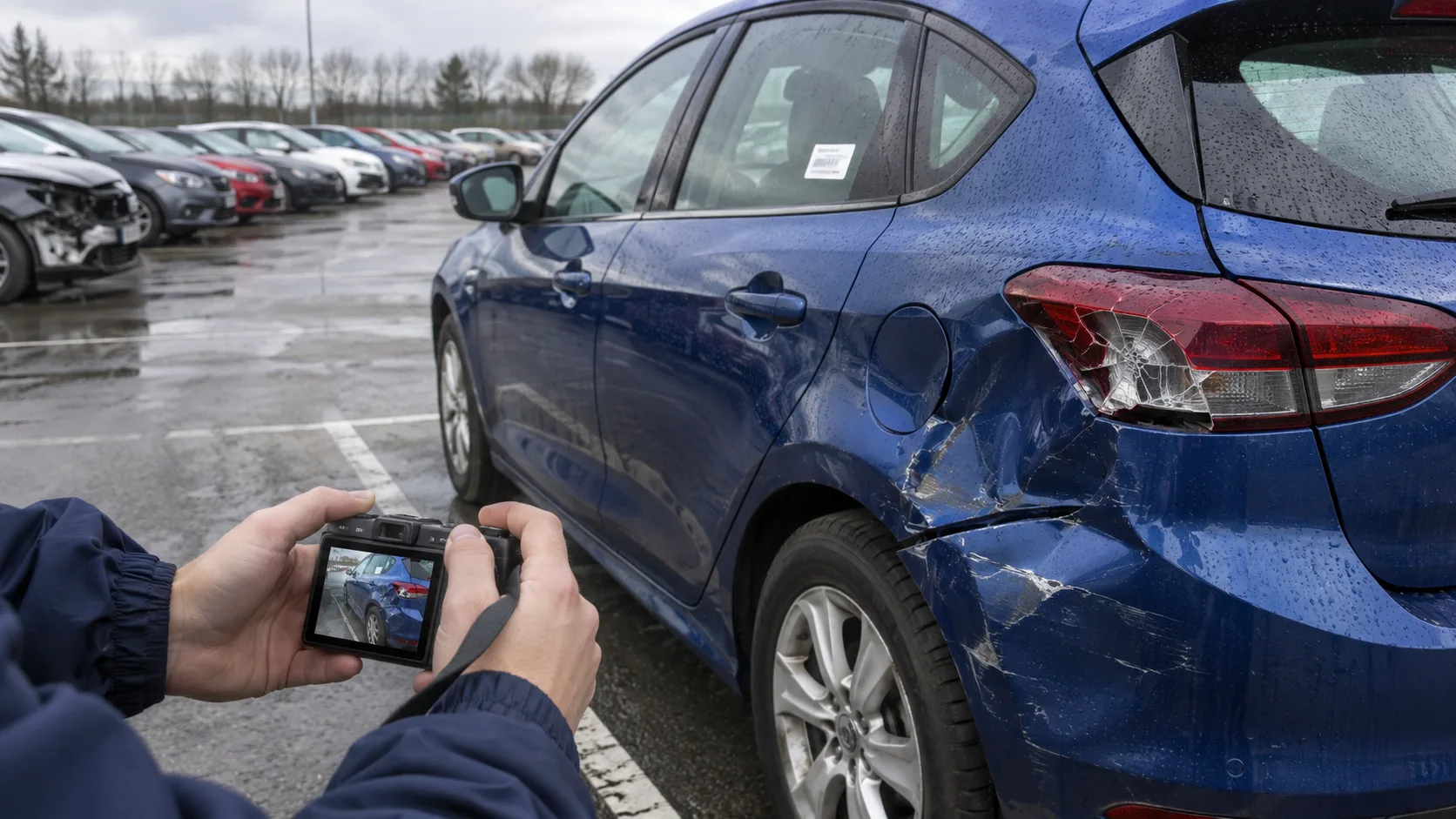
A three-year-old hatchback takes a hard knock at a roundabout. The insurer runs the numbers, decides repair doesn't stack up, settles with the owner — and at that moment the car stops being someone's transport and becomes a lot number. What happens next is one of the least visible corners of the motor trade: the salvage auction. Following one car through it explains the whole system.
The handover
Once a total-loss claim is settled, the insurer owns the vehicle and wants it off the books quickly. Most insurers have standing arrangements with salvage companies, which collect the car from the bodyshop or recovery yard, log it, photograph it and assess it. Before anything is sold, the car is assigned its salvage category — the marker that will follow it for life. Grasping what Cat N and Cat S actually mean is the single most useful piece of knowledge in this whole world: N for non-structural damage, S for structural, and the stricter A and B categories for vehicles that must never return to the road.
The listing
Salvage selling has moved almost entirely online. Our hatchback appears as a timed listing: a set of photographs, the category, mileage, whether it starts and drives, and known damage. The honest reading of any listing is that it shows what the camera saw — a salvage yard hasn't stripped the car down, so undisclosed damage behind the bumper or under the floor is the buyer's risk, which is priced into every bid. Experienced buyers read listings the way surveyors read houses: as much for what's absent as for what's shown.
The sale
Who's bidding? Mostly trade. Professional repairers hunt repairable Cat N and Cat S stock they can return to the road profitably. Dismantlers bid on cars whose value is in their components — a clean interior, undamaged lights, good panels, a sound engine. Exporters buy models with stronger values abroad. Some platforms admit the public to some listings and not others, and registration requirements vary, so a private buyer's access depends on the platform and the lot. Fees sit on top of the hammer price, and the car is sold as seen; collection is usually expected within days.
After the hammer: three roads
Road one is repair. The hatchback, if its damage really is cosmetic, gets panels, paint and inspection, and returns to the road carrying its category marker — which is why it will sell for less than an unrecorded twin, and why buyers of such cars should do their homework.
Road two is dismantling. If the sums favour parts over repair, the car is stripped: reusable components are catalogued and sold into the used-parts market, fluids and hazardous items are dealt with properly, and the shell goes for metal recovery.
Road three — mandatory for Cat A and B — is destruction, with B allowing parts recovery first and A not even that.
The stream nobody bids on
Here's the part of the journey we see at close range. Dismantling a modern car liberates a surprising mass of plastic that has little resale value as parts: a scuffed bumper nobody will buy, cracked trims, arch liners, damaged light units. At yards and repairers across Scotland and the North of England, that material goes into our bumper collection cages and headlight collection boxes rather than a general skip, gets hand-stripped and granulated, and returns to manufacturing as PP regrind. The auction decides who profits from a written-off car; the recycling decides how little of it is wasted. If your yard generates that stream, talk to us or call 0141 260 6602.
FAQ
Can a private individual buy from a salvage auction?
Often, but not universally — some platforms and some categories are trade-only, and most require registration and charge buyer fees regardless of who you are. The practical barriers matter more than the formal ones: no test drive, limited description, and recovery logistics all favour buyers who do this weekly.
Why do Cat A and Cat B cars get auctioned if they can't be driven again?
Because they still hold value — Cat B for its undamaged parts, which may be recovered before the shell is crushed, and Cat A for raw material. The buyers are licensed dismantlers and processors, and the sale is of salvage value, not of a vehicle.
How accurate are salvage auction descriptions?
They describe what was visible on inspection, honestly but shallowly. Structural or mechanical issues beyond the obvious damage frequently surface only once work begins, which is why trade bidders budget a margin for the unknown and why bargain-priced salvage is rarely the bargain it appears.
Do cars bought at salvage auction need anything before returning to the road?
A repaired write-off needs to be roadworthy and properly repaired, and a Cat S vehicle in particular has had structural damage, so professional repair and an independent post-repair inspection are the sensible minimum. The category stays on the record permanently either way, and insurers will ask about it.