What Happens to Written-Off Cars in the UK
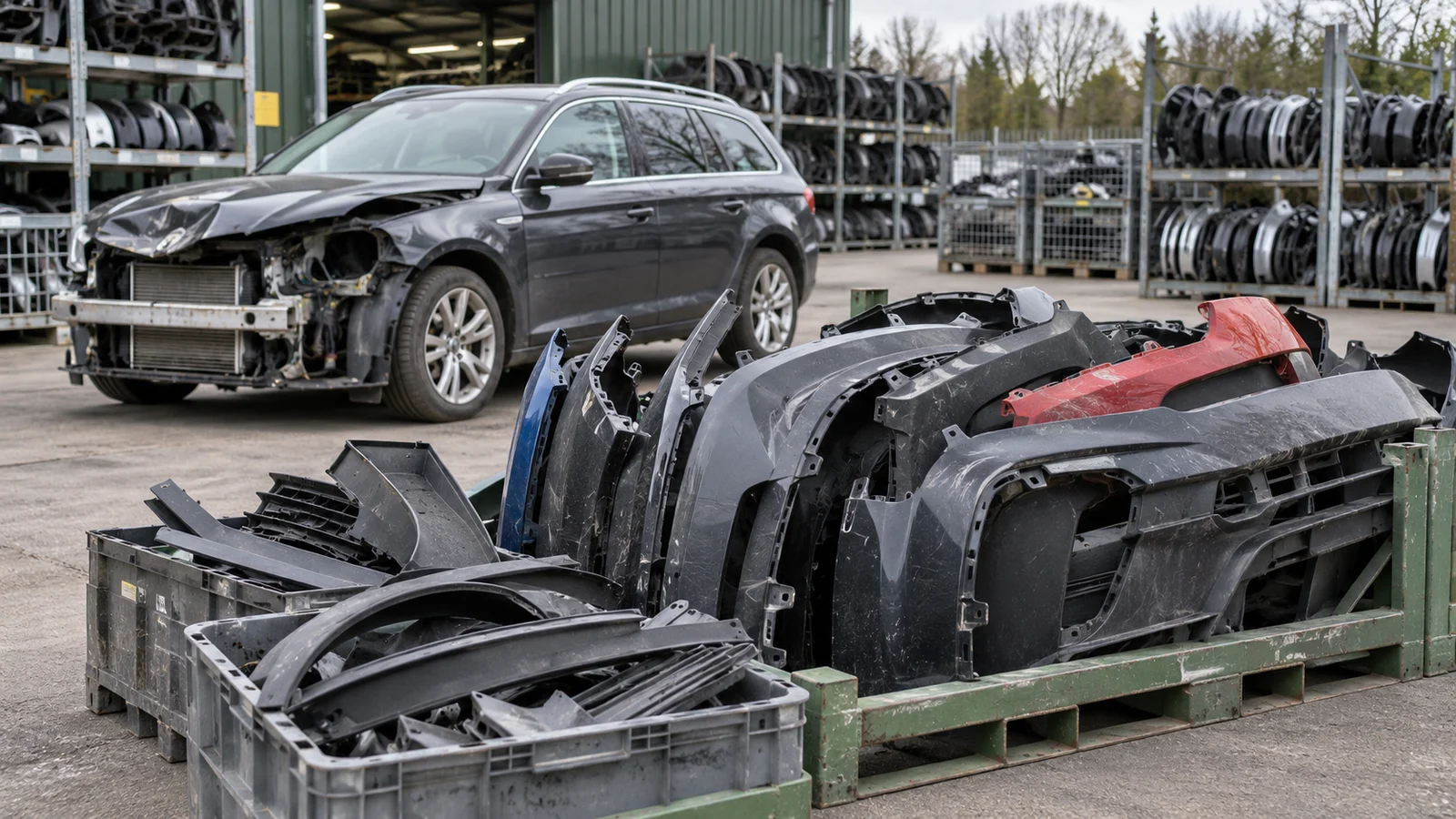
Somewhere in Britain this morning, a recovery truck is winching a five-year-old estate onto its bed. The front end is crumpled, the airbags have fired, and the owner is already on the phone to their insurer. The car still looks like a car — but its life as one may already be over. Follow it from here, because the journey of a written-off vehicle says a lot about how the UK's recycling system works, and where it leaks.
Stop one: the assessor's decision
The car goes first to a holding site, where an engineer assesses it against a simple commercial question: does repairing it make sense against what the car is worth? If the answer is no, the insurer writes it off and assigns it a salvage category. In broad terms, Cat A means the whole car must be destroyed; Cat B means the body shell must be destroyed though parts may be recovered; Cat S and Cat N describe structurally and non-structurally damaged cars that can, in principle, be repaired and returned to the road. The category stamped on our estate decides everything that follows.
Stop two: the salvage market
Most written-off cars are sold through salvage auctions, where the buyers fall into two camps. Repairers bid on Cat S and Cat N vehicles they believe they can fix economically — many written-off cars do return to the road after proper repair and the required checks. Dismantlers bid on everything else, buying cars not as vehicles but as bundles of parts and materials. Our estate, with its bent chassis leg, sells to a dismantler.
Stop three: depollution
Before anyone touches the car for parts, it must be made safe. End-of-life vehicles can only be lawfully processed at authorised treatment facilities, and the first job there is depollution: fuel, oils, coolant and brake fluid drained; the battery removed; airbags deployed or removed; tyres taken off. A car holds a surprising amount of hazardous material, and this stage exists so that none of it ends up in the ground.
Stop four: the harvest
Now the dismantler takes what has value. Engines, gearboxes, doors, seats, electronics, undamaged lights and wheels come off and go onto the shelf or into online listings — recycled parts that will keep other cars on the road at a fraction of new prices. Alloy wheels that are past reuse head for re-melting, the same destination our alloy wheel collection feeds from bodyshops. A dismantler's yard is less a graveyard than a warehouse with the roof missing.
Stop five: the shredder — where metals win and plastics lose
What remains of the estate is crushed and sent to a shredder, which tears it into fist-sized pieces in seconds. From here, separation is ruthless and efficient for metals: magnets pull out the steel, further processes recover aluminium and copper, and nearly all of it returns to production.
Plastics fare worse. Once a bumper has been through a shredder tangled with steel, foam and glass, it emerges as part of a mixed residue that is difficult and costly to separate back into usable polymers — and a significant share of that residue never becomes plastic again. The lesson is one the whole industry keeps relearning: plastic keeps its value only while it is still a known, separate material. A polypropylene bumper removed whole before shredding can be granulated into PP regrind and fed straight back into manufacturing; the same bumper shredded with the shell is largely lost.
The leak in the system — and the fix
That is why what happens before a car reaches the shredder matters so much, and why the same logic applies upstream in bodyshops, where bumpers come off cars that are not written off at all. A dedicated bumper collection keeps those plastics as a single clean stream, hand-stripped and granulated with nothing to landfill — the fate the shredder can't offer them. If your dismantling yard or bodyshop is sending plastics down the mixed route, Eco Auto Solutions covers all of Scotland and the North of England; ring 0141 260 6602 or ask us about a collection and we'll keep your plastic out of the residue pile.
FAQ
Who actually decides a car is written off?
The insurer, based on an engineer's assessment of repair cost against the car's pre-accident value. It is a commercial decision, not a verdict on whether repair is physically possible — plenty of repairable cars are written off simply because fixing them doesn't add up.
Can a written-off car ever go back on the road?
Cat S and Cat N vehicles can, after proper repair and the appropriate checks, and with the write-off recorded against the vehicle's history. Cat A and Cat B vehicles can never be re-registered — only parts (Cat B) or nothing at all (Cat A) may survive them.
What is an authorised treatment facility?
A site licensed to depollute and dismantle end-of-life vehicles. Only an ATF can lawfully issue the certificate of destruction that formally ends a car's registered life, and only after the hazardous materials have been removed.
Why do metals get recycled from written-off cars so much more successfully than plastics?
Because metals can be separated after shredding — magnets and density-based processes pick them out of the fragments reliably. Mixed shredded plastics have no such easy sorting route, so the polymers that get recycled well are the ones removed from the car whole, while they are still identifiable.