Hazardous vs Non-Hazardous Garage Waste: Knowing Which Is Which
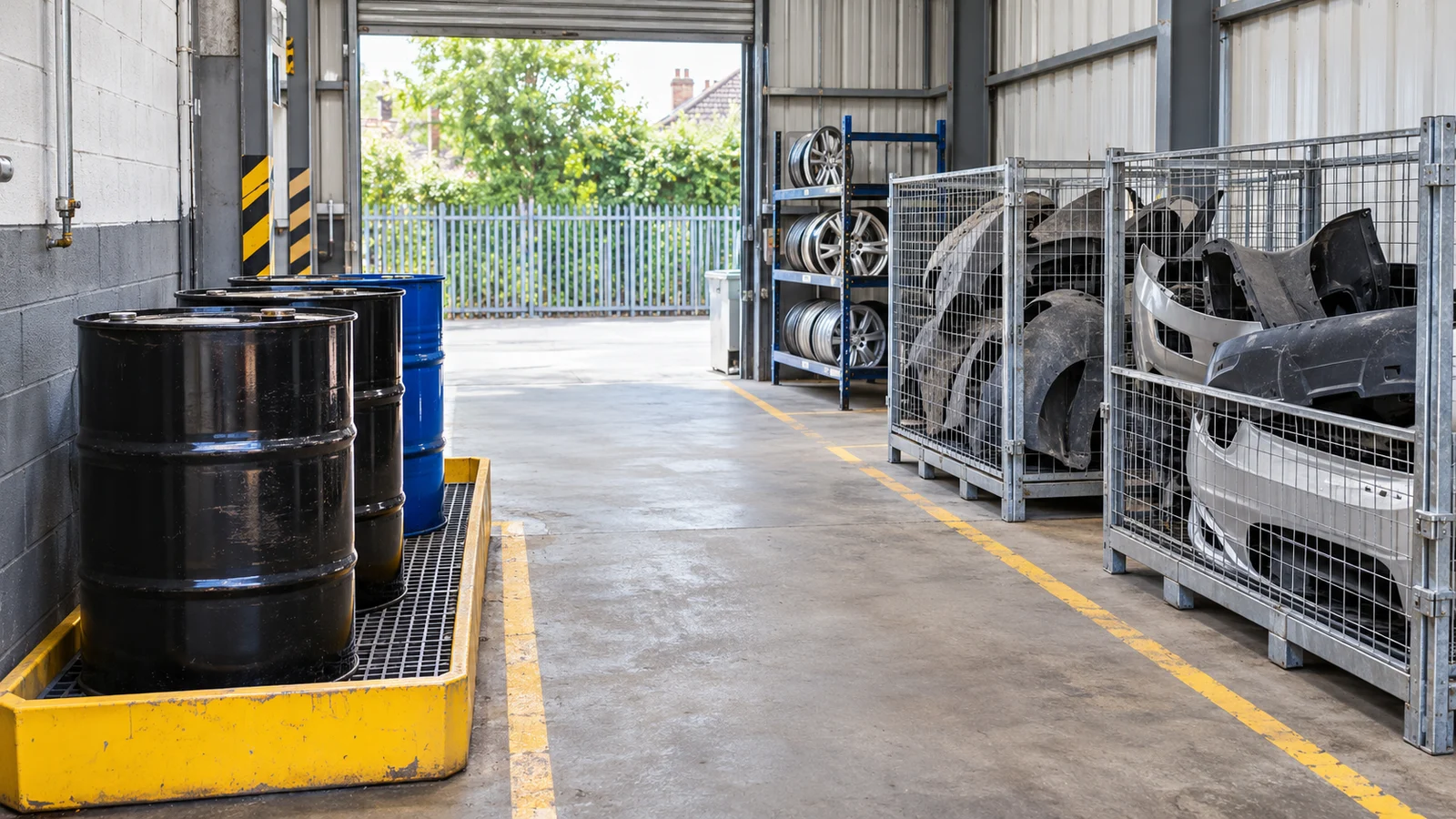
Used engine oil — hazardous. A scuffed bumper — not. Brake fluid — hazardous. A cracked wheel arch liner — not. Most workshop waste sorts itself quickly once you know the rule behind the sorting. This article answers the questions garage owners actually ask about which is which, and what each answer means in practice.
What makes waste "hazardous" in the first place?
A waste is hazardous when it has properties that make it dangerous to people or the environment: it's flammable, toxic, corrosive, an irritant, harmful to water life, or similar. The classification follows the material itself, not how carefully you handle it. A sealed drum of used solvent is hazardous waste however neatly it's stored, and a bumper is non-hazardous even lying in the rain.
The distinction matters because the two columns live under different rules. Hazardous waste needs specialist carriers, stricter paperwork and licensed treatment routes. Non-hazardous waste still falls under controlled waste rules — it must be described properly, handed to a registered carrier and documented — but the bar is lower and the disposal routes wider.
Which garage wastes sit firmly in the hazardous column?
The fluids, mostly, plus a few solids. In a typical garage or bodyshop, treat these as hazardous:
- Used engine oil, oil filters and oily sludges
- Brake fluid, antifreeze and screenwash concentrates
- Solvents, thinners, panel wipe and gun wash
- Paints, primers and part-used sealant or adhesive cartridges
- Lead-acid batteries
- Aerosol cans with residues
- Rags and absorbents soaked in any of the above
- Undeployed airbags and seatbelt pretensioners
If it pours, sprays, dissolves paint or came off a battery terminal, assume hazardous until you've confirmed otherwise.
And which wastes are non-hazardous?
The bulky stuff that fills a bodyshop's yard: bumpers, wheel arch liners, side skirts, trims, grilles, headlight housings, alloy wheels, metal offcuts, glass, cardboard and packaging. These are the streams where the question isn't "how do we dispose of this safely?" but "how much of its value are we recovering?" — clean polypropylene handled through a dedicated plastic waste collection comes back as manufacturing-grade regrind, and wheels sent through an alloy wheel collection go back to the melt. Non-hazardous never means unregulated, though: these loads still need accurate descriptions and a registered carrier.
Why does Scotland call it "special waste"?
Same concept, older name. Scottish regulations use the term "special waste" for what England and Wales call hazardous waste, and SEPA administers the Scottish regime where the Environment Agency administers England's. The practical obligations are closely aligned: identify it, keep it separate, use the right carrier, keep the records. A workshop operating to the stricter reading of either regime will rarely go wrong in the other.
Where do the borderline cases fall?
A few items catch people out. Headlight units are mostly non-hazardous plastic and polycarbonate — which is why a headlight collection can recycle them as a clean stream — but gas-discharge bulbs can contain small amounts of mercury and should be removed and handled separately rather than left in the unit. Empty paint tins depend on how empty: fully drained and dry is a different proposition from an inch of skinning paint in the bottom. Aerosols keep their hazardous character while pressurised or carrying residues. When a specific item genuinely isn't clear, ask the carrier or consult the regulator's guidance before the load leaves — the classification is yours to get right as the producer, and it's far cheaper to ask than to re-describe a load later.
The payoff for sorting correctly
Separating the two columns at source does more than keep you compliant. It keeps the hazardous stream small — you pay specialist rates only on what genuinely needs them — and it keeps the non-hazardous stream clean enough to recycle properly. Eco Auto Solutions is a SEPA-registered waste carrier (WCR/R/3021810) collecting bumpers, headlights, plastics and alloy wheels across all of Scotland and the North of England, with everything hand-stripped and granulated so nothing goes to landfill. Not sure which column part of your waste belongs in? Call 0141 260 6602 or put the question to us.
FAQ
Are aerosol cans hazardous waste?
Usually, yes. A can that still holds pressure or product residue — paint, lubricant, cavity wax — carries flammable propellant and should go through a hazardous route. Only fully discharged, punctured-and-drained cans processed through a proper system are treated differently, and that processing isn't a DIY job.
Are used headlight bulbs hazardous?
It depends on the bulb. Halogen bulbs are not hazardous. Gas-discharge (xenon/HID) bulbs can contain small amounts of mercury, so they should be collected separately, the way fluorescent tubes are. The headlight unit itself — housing and lens — is recyclable plastic once bulbs and electronics are removed.
Are tyres hazardous waste?
No — tyres are non-hazardous. But they're tightly controlled in their own right, with landfill long closed off as a route, so they need a carrier with a genuine tyre recovery outlet rather than a skip.
Who is responsible for classifying our waste — us or the contractor?
You are. The producer classifies and describes the waste; the carrier and site rely on that description. A good contractor will help you get it right, but "the waste company never mentioned it" doesn't move the responsibility.