The UK Plastic Recycling Industry: How It Works and Where Automotive Fits
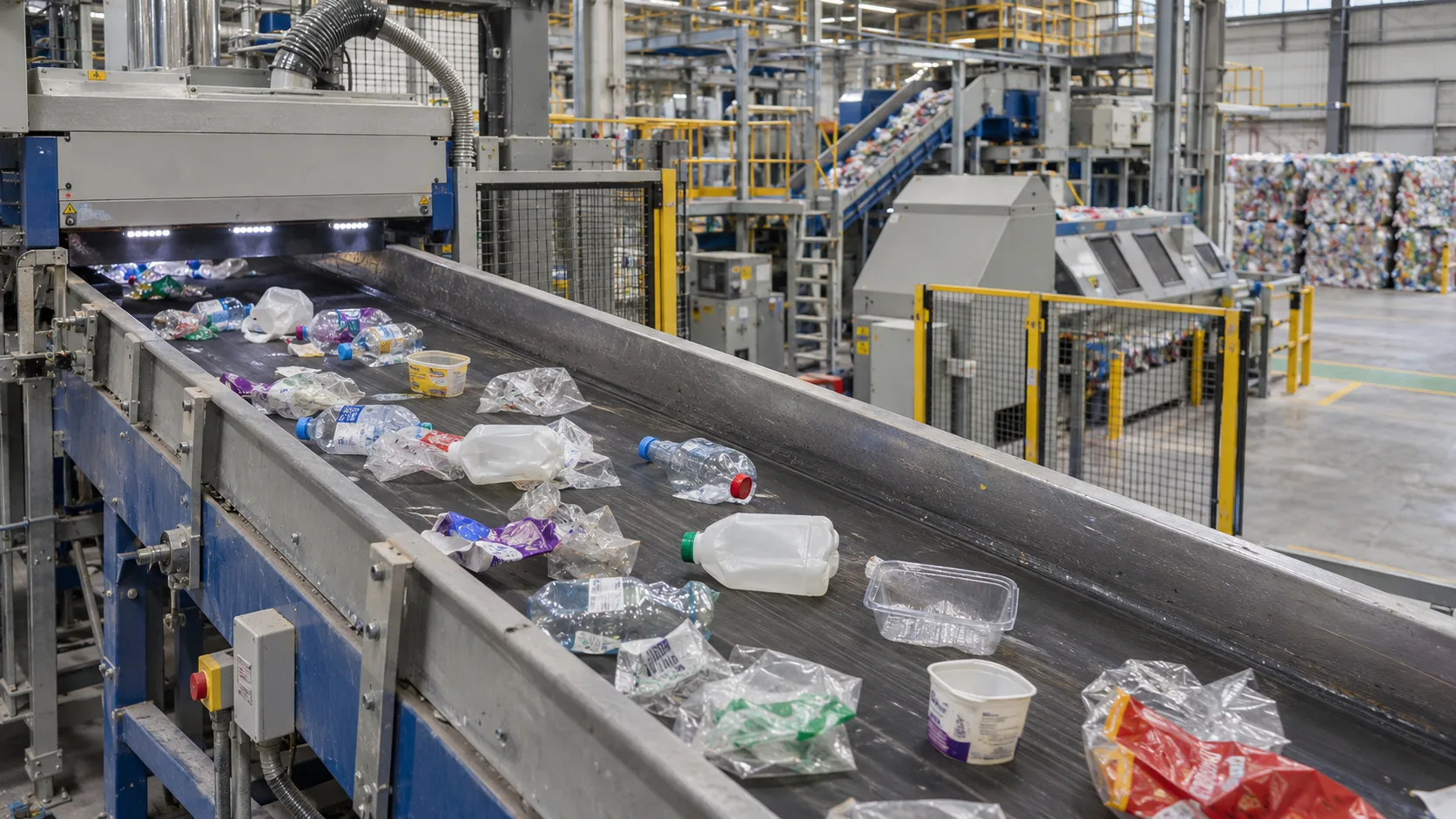
Follow a piece of plastic from the moment it stops being useful, and you get a tour of an industry most people only ever see the first hundred metres of. The bin lorry is the visible bit. Behind it sits a layered system of sorters, reprocessors, compounders and end users — and whereabouts your plastic enters that system largely decides whether it comes back as a product or goes up a chimney. Here's the tour, ending at the corner of the industry we work in.
First stop: the kerbside tier
Household plastic — bottles, pots, tubs, trays — travels from kerbside collections to materials recovery facilities, where mixed recycling is separated by machine and hand into saleable grades. The output is bales: compressed blocks of roughly-sorted plastic, traded as a commodity to whoever will reprocess them, in the UK or abroad. This tier handles enormous volume, but it inherits an awkward feedstock — many polymer types, food residue, labels, films — so a meaningful share of what enters a sorting line leaves it as reject material destined for energy recovery. The kerbside tier is where most public opinion about recycling is formed, and it is the hardest corner of the industry to do well.
Second stop: the reprocessors
Reprocessing is where sorted plastic becomes raw material again. Bales or segregated feedstock are checked, stripped of contamination, size-reduced, washed where needed, then granulated or pelletised into a form a factory can feed into a moulding machine. This is also where the industry's real currency becomes obvious: purity and consistency. A reprocessor can sell a clean, single-polymer stream of known origin all day long; a mixed, contaminated one is worth little or nothing, whatever the tonnage. The entire economics of plastic recycling condense into that one sentence, and every tier upstream either respects it or pays for ignoring it.
Third stop: the specialist streams
Alongside the household tier runs a quieter network of commercial and industrial streams — construction off-cuts, agricultural films, packaging from factories — where recycling works noticeably better. The reason is simple: these streams arrive segregated at source. A business producing one type of plastic waste, kept separate and kept clean, hands the reprocessor exactly what the economics demand. No sorting line in the country can un-mix material as cheaply as a producer can avoid mixing it in the first place.
Last stop: where automotive fits
Automotive plastic belongs firmly in that specialist tier, and it's an unusually good citizen of it. A bumper cover is a large, mostly single-polymer object — typically polypropylene — that never goes anywhere near a kerbside bin. The sector feeds the industry from two directions: end-of-life vehicles dismantled at authorised treatment facilities, and the repair trade, where bodyshops replacing accident-damaged panels generate a steady, clean stream of covers, wheel arch liners, trims and grilles. That second stream is where Eco Auto Solutions sits. A dedicated plastic waste collection keeps a workshop's hard and soft plastics out of mixed general waste; the material is hand-stripped — fittings, clips and foreign material removed the way no automated line quite manages — and granulated into PP regrind supplied back to manufacturing, with nothing to landfill. Not everything in the stream is so cooperative: a modern light unit laminates several materials into one housing, which is why headlight collection runs as its own specialist route rather than disappearing into the general pile.
What the tour teaches
Three things. The industry is not one system but several, and judging all of it by the kerbside tier flatters nobody. Value tracks purity, so the cheapest place to create a recyclable stream is at the point the waste is made. And automotive plastic, handled as its own stream, is among the best feedstock the industry gets — big, identifiable and consistent. A workshop that segregates its plastics isn't doing the industry a favour; it's holding the valuable end of it. If yours is ready to plug into that system, we're at 0141 260 6602 — or start the conversation here. We collect across all of Scotland and the North of England.
FAQ
Why can't a bodyshop just put bumpers in its commercial mixed recycling?
Because mixed recycling routes material to sorting lines built for packaging, where a bumper is an oversized contaminant rather than a product — it will typically be pulled off as reject. A dedicated automotive stream keeps the polymer identity intact from workshop to granulator, which is what gives the material value instead of a disposal cost.
Is British plastic recycling actually done in Britain?
Some is, some isn't. The UK has genuine domestic reprocessing capacity, but a share of collected plastic — particularly lower-grade baled material — has long been exported for reprocessing overseas, under rules governing what may be shipped and where. Specialist streams processed domestically, where the material's chain from source to regrind is short and visible, avoid that question entirely.
What's the difference between a sorting facility and a reprocessor?
A sorting facility separates mixed material into graded bales but changes nothing about the plastic itself; a reprocessor turns those grades into usable raw material — cleaned, granulated or pelletised to a specification. Plenty of plastic is "sorted" without ever being successfully reprocessed, which is why the two stages shouldn't be spoken of as one.
Which automotive plastics does the industry most want?
Polypropylene leads comfortably: it dominates bumpers, liners and many trims, it reprocesses well, and manufacturing demand for recycled PP exists to receive it. Clearly marked single-polymer parts of any common type are workable; the difficult customers are multi-material assemblies — laminated light units, flocked or chrome-effect trims — where separation costs eat the value.